 111
111 2
2 3
3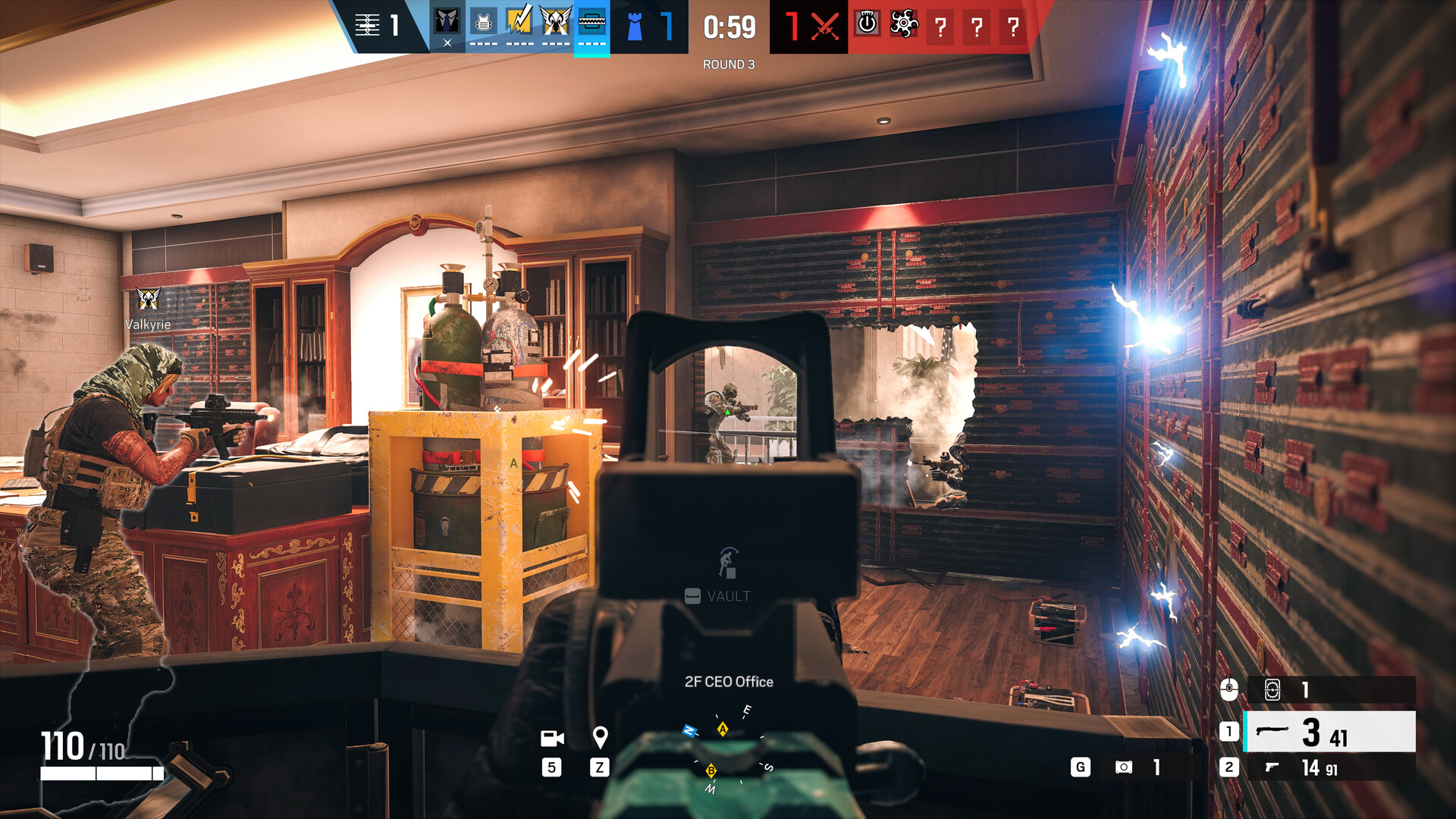
The competitive Rainbow Six Siege scene has come a long way.
In 2017, the first-ever Six Invitational (SI) esports tournament was held for the Ubisoft Montreal-developed tactical first-person shooter, bringing together six competing teams for a $100,000 prize pool. The event was hosted in the Canadian developer’s hometown, and it returned there for three subsequent years.
Since then, SI has grown significantly to become one of Twitch’s most-watched esports titles, with Ubisoft expanding its international footprint with events in such cities as São Paolo, Stockholm, Paris, and Boston while upping the prize pool to a whopping US$3 million (about C$4.1 million). This would be a particularly strong performance for any 10-year-old game, especially in a market that’s long been oversaturated with live service games, many of which end up being shut down. Siege even underwent a rebrand last year to Siege X that included the game going free-to-play, which no doubt brought in new players.
But Siege is also notable because it’s a big Canadian success story in an industry where Canadian developers often go unrecognized and unsupported. While around 1,000 people around the world now work on Siege, nearly half of the workforce is based at Ubisoft Montreal, including the core creative team.
None of this is lost on Joshua Mills, the creative director on Siege. As thousands flocked to Paris for the 2026 SI last weekend, Mills took some time between matches to sit down with media and Siege creators. Notably, he’s been working on Siege for over four years, previously as game director (responsible for working on the core gameplay experience) before becoming creative director (overseeing the outlining of the overall creative vision) this month.
For Mills, Siege’s longevity speaks to the talent and fortitude of Canada’s game makers.
“As a Canadian, I find we’re very passionate people who love to give it our all, and we don’t back down from a challenge – we go all in all the time,” he says. “Like esports, competitive games, and just live service [games] in general, it’s highly competitive, it’s very, very challenging, and it’s always ongoing, but we don’t stop – we keep going.”
It’s a sentiment that’s echoed by Maxime Vial, Ubisoft Montreal’s Rainbow Six esports director.
“It’s really the team – when it comes to the dev team of the game, and having seen that product grow and develop over the years, how the community has grown, it’s really magical to see that the project that you put so much love and heart into gets to stay for so long,” he says. “Siege is a game that started with a pretty unique premise. Back then, there were not many hero shooters, and so we’re really excited and happy to see that we’ve just managed to sustain it and also carve ourselves such a unique space in the video game genre.”
Siege‘s focus on squad-based tactics, destructible environments and unique Operators has helped it stand out in a crowded multiplayer space. (Image credit: Ubisoft)
Indeed, in a market largely dominated by high-octane, over-the-top shooters like Call of Duty, Battlefield or even Fortnite, Siege stands out for its focus on slower-paced, strategic matches. It can make for a rollercoaster of emotions, as seen in the Grand Finals between Europe’s Team Secret and the U.S.’ FaZe Clan. After repeated overtime periods in which attendees went wild every time Team Secret managed to clinch a match, FaZe ultimately won 3-1, defending its title as Invitational Champion.
While some outsiders might just see this as a bunch of boys sitting at computers playing games, the truth is that there’s much more to it than that. Just ask Troy Jaroslawski, a Canadian pro Siege player with Toronto’s Shopify Rebellion. The Canadian team made it to the SI playoffs but lost in the lower bracket to the U.S.’ Spacestation Gaming.
As Jaroslawski explains, esports can be a full-time commitment. Normally, his day begins at 10 a.m. with a workout, followed by a meal and reviewing some replays of scrimmages. From around 2 p.m. to 10 p.m., he’ll be practicing with his team, outside of a dinner break in between. This routine goes for six days a week.
“People can’t believe that – they’re shocked that I am a pro gamer. When they speak to me and hear about how I go and live my day-to-day life [with] my mindset, they’re very surprised — it almost shatters stereotypes [about] gamers,” he says.
He’s been with SI since the beginning and even won the tournament in both 2017 and 2020. And his connection to Siege has even come full circle, given that Shopify Rebellion is based in Toronto, and he even competes under the name of “Canadian” among U.S. teammates.
“I’m very proud to be Canadian, and I’m very happy now that I do play for a Canadian organization. I still live in Toronto, that’s always been a big thing [for me], too,” he says.
All of this has helped him continue to appreciate Siege, even after all this time.
“It’s just the depth of the game – how many layers there are to it, in terms of how the meta can be changed in so many ways,” he says, referring to all of the different types of Operators, gadgets, and pieces of destructible environment. “There’s so many levels to it and so much depth to it, and I think that just emphasizes, even more so, the strategy and teamwork as well, because there’s so much you have to consider. So there’s more things you have to do to make sure you’re on the same page.”
And even though Shopify Rebellion didn’t do as well as in the 2026 SI as he’d have hoped, he says he still enjoys being at the event to watch his fellow players.
“I just like seeing the game played at the highest level. I think the reason that I’ve played as long as I have and why I’m good at the game is because I’m kind of a student of the game. I really like watching good teams play and trying to learn from them, trying to figure out why they do what they do,” he says.
He adds that Siege represents what he loves about sports in general. “On the more human side, when I’m a competitive person, I grew up on sports my whole life as well,” he says. “So I just always appreciate the stories of competitors as well. So when I’m out of the tournament, there’s player storylines that I’ll root for.”
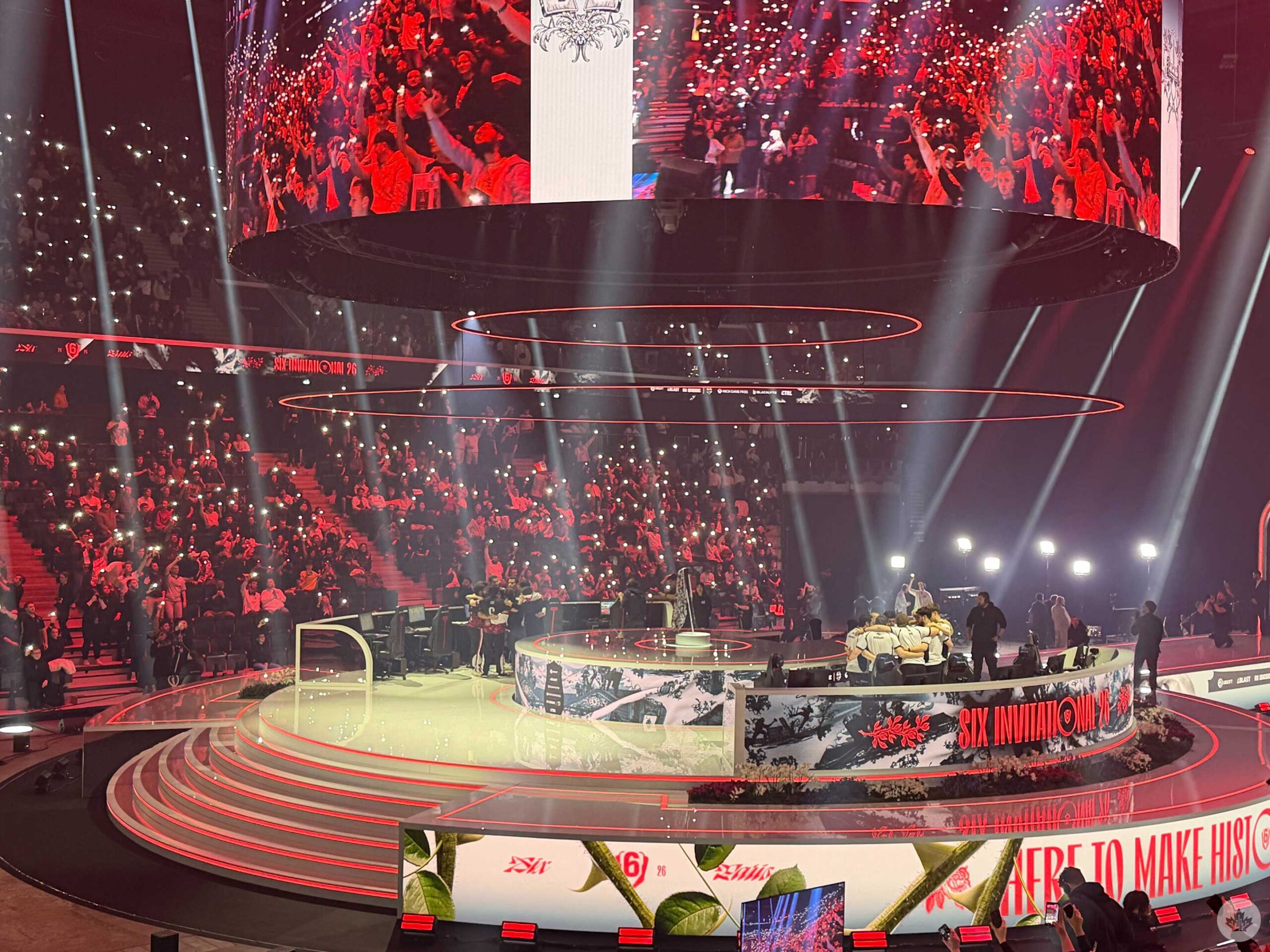
SI 2026 in Paris.
In a similar vein, Vial says SI is a wonderful opportunity to bring together people who may otherwise not have met.
“I have a memory of meeting one of the [Siege] content creators. She was not the biggest content creator, but she’s someone from the Philippines that had such an impact on the local scene, and we invited her to one of our SIs in Montreal,” he says.
“I remember having been in touch with her for a couple of months, seeing her preparing for this trip, and then her coming to SI and seeing what it’s like for the first time at an event like that. It felt really humbling for me to see that we could affect the lives of some of our community members and give them the opportunity to meet their fans in person on the other side of the world in a completely different country.”
“That’s something I feel every time I get into an arena — it’s just an amazing feeling,” adds Sebastian Ratto, Paris-based Rainbow Six senior director of competitive products. “For all of us who are involved every day on the game, that boost of energy reminds us why we are all doing this.”
And while this speaks to the experience of actually being at SI, many probably underestimate how much goes into making it all happen. As Ratto explains, SI is the perfect example of the global undertaking between Ubisoft Montreal and its partners.
“The goal of the esports team is, ‘How do we showcase the game at its best?’” he says. “It’s a lot of work. Maxime and I are working together, end-to-end, with different expertise, focusing on both the ecosystem of the game and what we do for the region as well. It’s how we foster this environment to then get the team ready and the fan hype around those international events.”
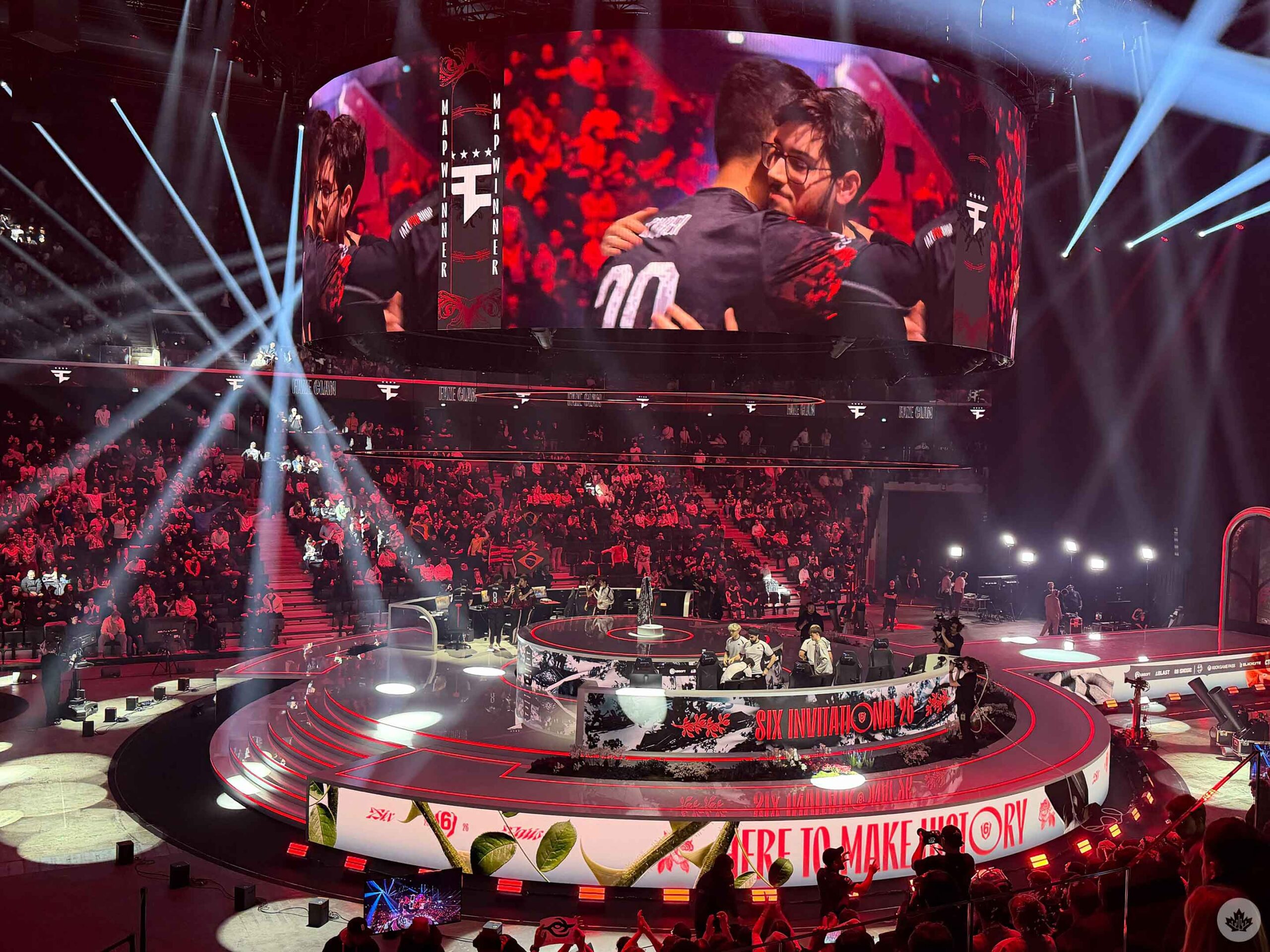
FaZe Clan (pictured) won Six Invitational 2026.
In total, it takes about a year to put together an event like SI 2026 in Paris. Throughout the year, as many as 200 people from across Ubisoft and its partners at esports entertainment company Blast will be working on SI, according to Vial. That’s to say nothing of other Siege-related events, like the R6 Majors in various cities or next year’s Esports World Cup in Saudi Arabia.
“There are a lot of big events to ship throughout the year,” says Vial. “It’s all around the clock.”
One of the highlights of SI involved a panel featuring Mills and his fellow Ubisoft Montreal developers, former Siege creative director Alexander Karpazis and live content director Christopher Budgen. While on stage, the developers shared a roadmap of what’s coming to Siege in Year 11, including, most notably, the addition of Metal Gear’s Solid Snake as a playable Operator.
Of course, the crossover with a legendary gaming franchise drew loud applause, but it was fascinating to also see similar reactions from the crowd over announcements related to new fan-requested gameplay tweaks, like the return of placement matches, the new Social Hub and dropping the 6v6 Dual Front mode to focus more on the core 5v5 experience. And when the teleprompter experienced technical difficulties, the audience encouraged the developers with cheers and an impromptu wave across the arena.
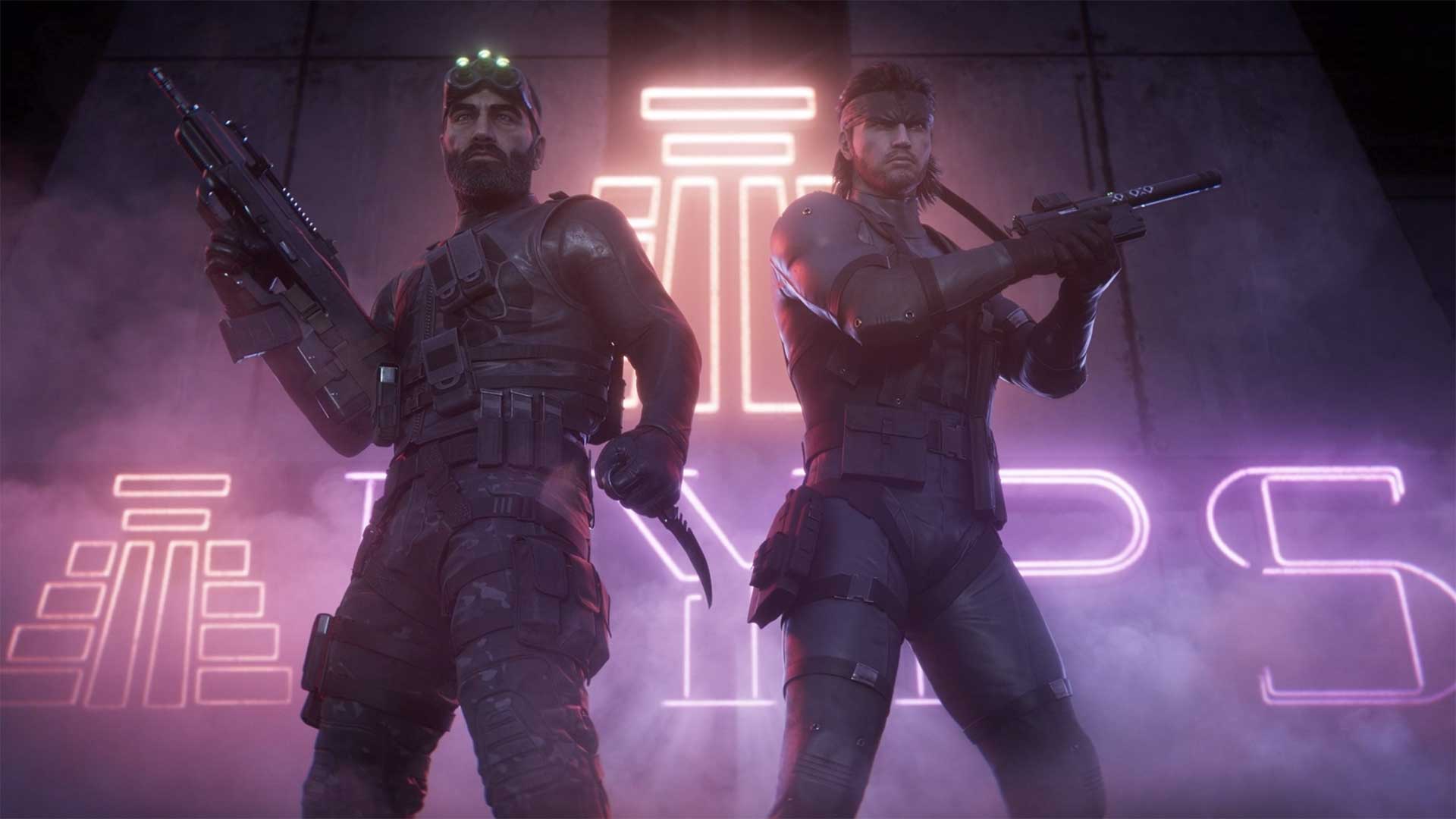
Year 11 of Siege is led by a Metal Gear-themed crossover. (Image credit: Ubisoft/Konami)
All of this speaks to the unique relationship between developer and fanbase, where the two work closely together to shape the future of Siege. And in the case of a game like this, which has such a huge competitive scene, Ubisoft Montreal has to be careful to approach any changes with both casual and hardcore players in mind.
“We’ve got to listen to all of it,” says Mills about soliciting feedback. “For example, in Munich [at the Blast R6 Major] and even at SI, we met with the pro teams and sat down with them and went over a bunch of stuff in a workshop. ‘What are the points of friction for you? What’s going on? What do you feel like you need? How’s the balancing?’”
He says the Munich meeting was particularly notable because that was right before a “big” patch, 4.2, was about to drop, and so players had to adapt. “The best part about that [is] they knew how well that’s going over with the community, and what that does for the game as well. Because if people are excited then that means we’re going to have more people coming to check out the pro scene and seeing like, ‘Hey, maybe I can do that,’ and get to that point and the energy is there.”
“[It’s about] finding a middle ground in all of this while also maintaining a very strong fun factor that is going to allow all players to still enjoy their experience,” adds Vial, noting that Ubisoft also holds regular workshops with casual players. “Because even for players who are sinking thousands of hours into this, [it might not be] because it’s their job, but because they enjoy it. So it’s about balancing all of this.”
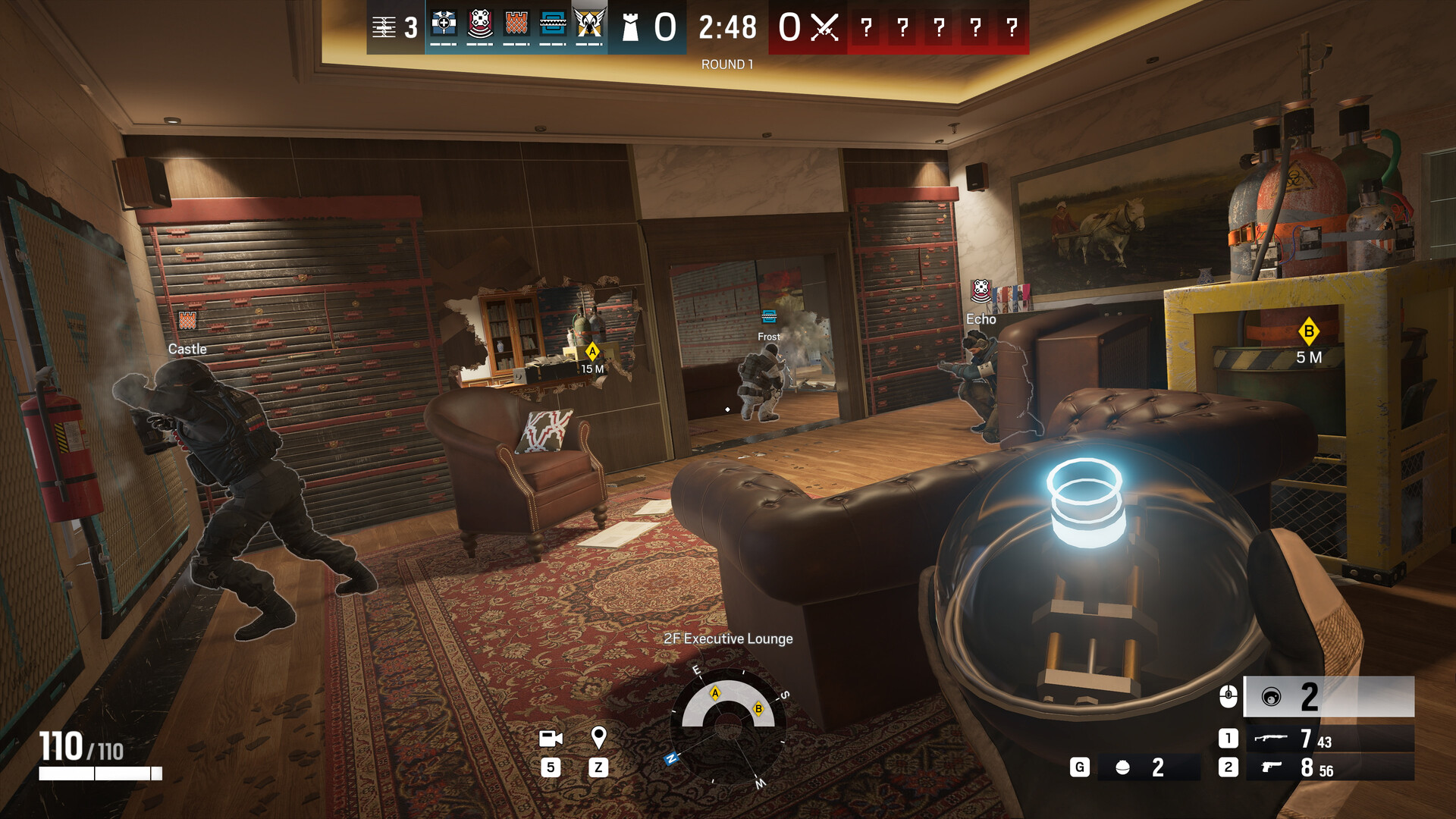
Mills says “unbreakable” has been the mantra behind Siege since the beginning. (Image credit: Ubisoft)
Of course, you can’t please everyone, and that’s something Jaroslawski says more people should understand.
“I think they get a lot more flack than they deserve. The grass is always greener, there’s always something to complain about everywhere. I’ve heard similar complaints about the game, that it might be dying, and stuff like that. I’ve heard it since year one of the game,” he says. “And every time it ends up the same way. They make good changes, we end up getting more and more support for the game as well […] The game as a whole is very much alive.”
For Mills, it all comes back to an ethos that has driven the developers at Ubisoft Montreal since the very beginning of Siege.
“If you see any of the Siege devs, they have blue jackets on, and they’re these cool jackets we got for the 10th anniversary. On the back, it says ‘unbreakable,’” he explains. “And back in that time, whenever that challenge was in front of us, the statement and the rebranding, internally, of who we are was, ‘We’re unbreakable.’ We never stop. We keep moving forward. We take our hits, we learn from them, and we get better.”
Rainbow Six Siege X is free-to-play on PS4, PS5, Xbox One, Xbox Series X/S, PC and Amazon Luna.
MobileSyrup may earn a commission from purchases made via our links, which helps fund the journalism we provide free on our website. These links do not influence our editorial content. Support us here.
