111
111 2
2 3
3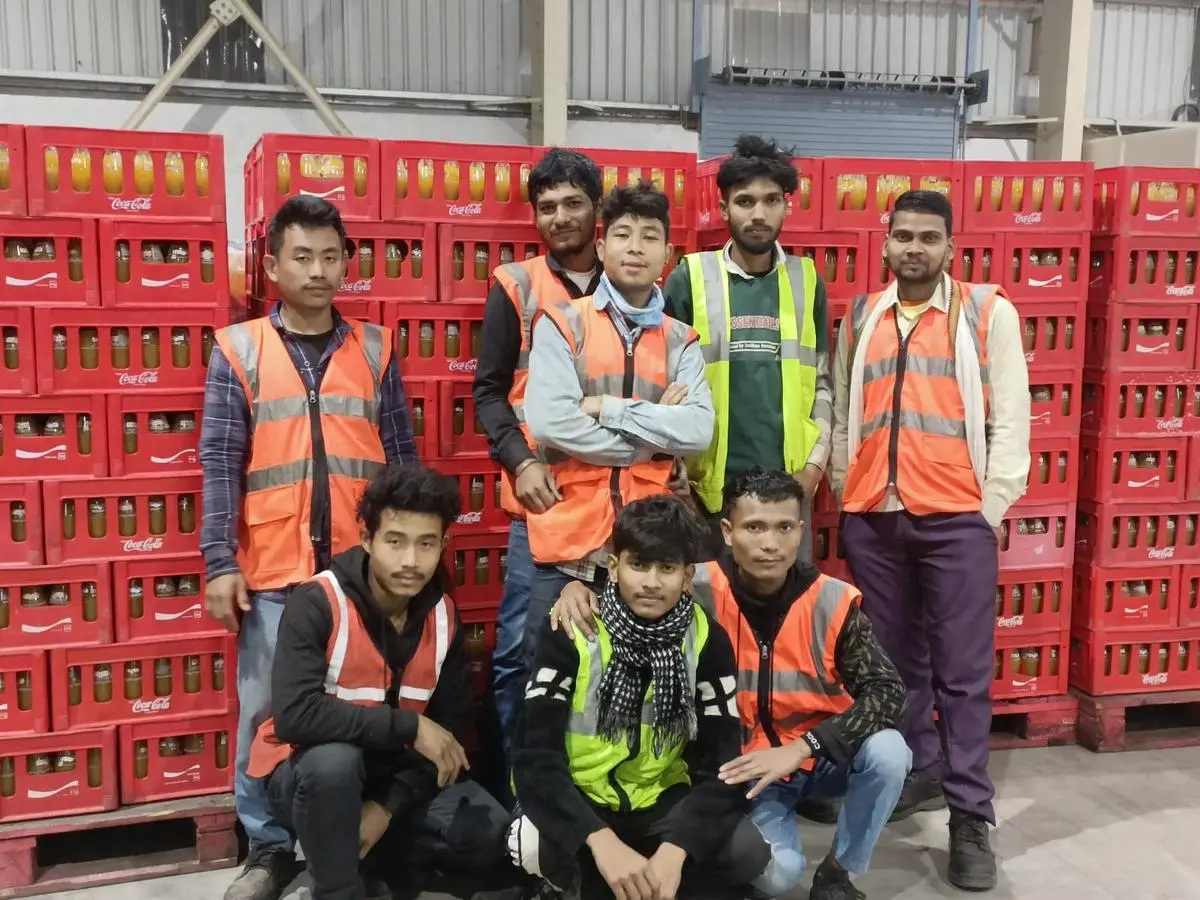
Shiva Taid was sitting among the crowd at the Mising Youth Festival in Assam when the speeches began. Around him were rows of people who had travelled from riverine villages and flood-affected settlements, drawn by what the festival had long promised: a space for celebration and collective presence. For Shiva, it was simply a day to watch and listen and be part of the largest cultural gathering of his community.
It was the Mising Youth Festival, held every year since 1996 to revive Mising tribal cultural practices, that was under way at Kareng Chapori, its final day drawing the largest crowd. By afternoon, performances and exhibitions gave way to political speeches. Union Home Minister Amit Shah took the stage. It was the responsibility of the Mising tribe, he said, to stop infiltration, and he blamed the Congress for having allowed it over the past three decades. Assam Chief Minister Himanta Biswa Sarma followed, echoing the message, saying that the Mising living along the riverine belts should stop what he described as “Miya Bangladeshi” encroachments.
Shiva, a resident of Barkhamukh in Lakhimpur district, had come with others from his village expecting the political leaders to speak about the tribe’s long-standing struggles, particularly the demand for Sixth Schedule protection. But that did not happen. Instead there was a call to fight Bengali Muslims, delivered from a stage meant for cultural celebration.
Later that night, around 11 pm, Shiva’s phone rang. The call was from Bengaluru. His younger brother, Daktar Taid (18), who had migrated there for work just a few months earlier, was dead. “He didn’t want to go,” Shiva said. “The situation forced him to.”
Barkhamukh is a flood-affected village in Lakhimpur district where work is scarce and survival fragile. Their father can no longer work, and Shiva is unemployed. He has a younger sister whose education depends on what the family can manage. Some evenings, Shiva said, there was not even oil to light the stove—vegetables were out of the question.
Daktar was the one who took on the burden and left home to earn. “He was very young,” Shiva said. “But he had taken the burden on himself.”
In Bengaluru, Daktar lived with other workers from his community, including two from his village, in a rented shed. The work was irregular. The room was cramped. Still, he kept sending money home whenever he could. He often spoke about returning. Three days before his death, Daktar called again. This time he was crying, Shiva said. “He told me he wasn’t feeling good there. He said he wanted to come back.”
Shiva told him to return. Their grandfather’s death anniversary was approaching, and Daktar said that he would come home in four or five days. He wanted to make some extra money to buy a phone, Shiva recalled. That was the last time the brothers spoke.
A few days later, Daktar Taid was found dead in Muthsandra village on the outskirts of Bengaluru, along with three other Mising men: Narendranath Taid (24), Jayanta Sinte (25), and Dhananjay Taid (20). All four worked as loaders at a warehouse in the area. Co-workers found them lying unconscious in their poorly ventilated room. Police said that preliminary investigations pointed to death due to suffocation from gas fumes in the closed room, with doors and windows shut, when the group was cooking food late at night.
Dhananjay Taid, also from Barkhamukh, had left home because staying back had become impossible. When his body was brought back, his father, Bhola Taid, sat outside their bamboo-and-mud house, stunned into silence. Dhananjay had been the only earning member of the family. Bhola is old now, his body worn down by years of labour and illness. “Everything is finished,” he said. “I have nothing left. Who will look after me now?”
Dhananjay had come home just three months ago, hoping to stay back for good. But the money ran out. There was no work in the village and no alternative nearby. Bengaluru was not a choice; it was the only option left. Neighbours remember watching him leave again. “He didn’t want to go,” said Cheni Ram, a neighbour. “But what else could he do? There is nothing here for our boys.”
Cheni Ram’s voice sharpens when he speaks of migration. From Barkhamukh alone, he says, 40 to 50 young men have left in recent years, travelling to Bengaluru, Hyderabad, or Kerala to work as daily wage labourers, living in cramped rooms and working at unsafe worksites.
“First, where is the school here? Where is the education? Most boys don’t even complete their studies. There is no awareness, no guidance. And even if someone wants to learn a skill—electrician, plumber, anything—where will they learn it? There are no institutions, no training centres for tribal boys like ours.”
A group of young Mising men employed at a warehouse near Bengaluru. These men travel far from home and live and work in hazardous conditions.
| Photo Credit:
BY SPECIAL ARRANGEMENT
What remains, he said, is labour at the margins of cities. “We need jobs. We need education. We need protection for our children,” Cheni Ram said. “Instead, what are they giving us?”
Cheni, too, had attended the Mising Youth Festival. Like many others, he had gone expecting that the leaders would speak about the community’s long-standing demand for Sixth Schedule status and the urgent question of employment for Mising youth, issues that formed the festival’s main agenda this year. “But not one leader spoke about the Sixth Schedule or about giving employment to our people,” he said.
Instead, the stage was taken over by speeches about Muslims, infiltration, and encroachment. “Why are they dragging us into this Hindu-Muslim fight?” asked Cheni Ram. “There are no Bengali Muslims living in our villages in Upper Assam. What do we have to do with this?” He added that even as young men from Barkhamukh are dying in distant cities, the government is busy offering the community an enemy instead of employment. “Our boys are not safe. They are dying. And no big leader has come to ask about these families. No solidarity, nothing,” he said.
His anger also turns inward, towards Mising organisations and leaders who, he believes, have stopped asking questions. “They have sided with the government. They invited them, made it a rally, and kept quiet. Our issues disappeared.”
Maina Pegu (28), from Borbari, a remote village in the Dhakuakhana subdivision of Lakhimpur district, is back home. For four years he lived outside the State, moving between Bengaluru and Kerala, doing whatever work he could find, first as a daily wage labourer and later as a security guard. Like most young men from his village, he left because staying back was never really an option. “There is no work here,” he said. “No farm that can feed you the whole year. No job to hold on to.”
Also Read | Hate wears a crown in Assam
In Bengaluru, life followed a fragile routine. Long hours of work, irregular pay, shared rooms, and constant uncertainty. “We lived knowing that one accident could finish everything,” he said. That accident happened one evening on a road in Bengaluru. A motorbike hit him, throwing him off balance and leaving him injured. There was no insurance, employer support, or safety net. Recovery meant only one thing: returning home. “I had no option,” he said. “If I had stayed there, I would have been finished.”
He returned to Borbari injured, his savings exhausted by medical treatment. Since then work has been irregular.
He recalled an incident in Bengaluru involving a Mising boy who was beaten up by local residents and left severely injured. A complaint was filed in Bengaluru, and Assam as well, but nothing happened. “The police did nothing. We expected Assam Police and our political leaders to stand with us, but no action was taken and no follow-up happened.”
What unsettles him most is the contrast. “Here, if we protest or speak against the government, they will arrest us. They will put us behind bars. But when our boys are attacked outside Assam, when they are injured or killed, there is no state response. Then there is silence.”
Said Maina Pegu: “We don’t need to be told whom to stop from entering our villages. Bengali Muslims are not even there in our villages, so it is an irrelevant issue. It is not killing us.”
According to him, what is killing the community is the steady emptying out of villages like Borbari, with young men leaving one by one and fields left unattended. “It is our people leaving that is destroying us,” he said. “It is killing the villages. It is killing the community.”
He said: “Don’t tell us whom to fight. Protect us. Give us work.” He paused before adding: “That is all we are asking for.”
As anger grew over what had been said and what had not at the Mising Youth Festival, questions turned towards the organisation that had convened it, the Takam Mising Porin Kebang (TMPK), the largest student body of the Mising community. For years, the TMPK has carried the double responsibility of preserving culture and negotiating politics on behalf of a generation that is leaving faster than it can be counted.
Also Read | The chilling truth about Delhi’s homeless shelters
Sun Panging, the organisation’s general secretary, said that the decision to invite Amit Shah and Himanta Biswa Sarma did not come from any party alignment. According to him, protest has brought jail, not results; negotiation, however fragile, is what remains. The idea was to show them the size of the community and the weight of its demands, especially the long-pending call for Sixth Schedule protection. Even if not given, at least they could remind the government of the demand, he said.
But what unfolded on stage slipped outside that intention, he admitted. The language of infiltration and religious division should never have taken over a space meant for cultural assertion. “It is unfortunate,” he said.
On the deaths of young men like Daktar and Dhananjay, he spoke of immediate responsibilities, bringing the bodies home, and standing with families in the initial days of grief. But he also spoke of a larger failure of the government and the organisation. “Education has not reached far enough. Employment has not arrived at all. The community is losing its young generation and not finding ways to keep them alive at home.”
The TMPK once spoke from the streets. Now, it walks a narrow line. Guns and jail have already cost the community too much, Panging said. “We started the youth festival so that our boys do not pick up weapons, so that they choose education, so that the autonomy movement stays alive.”
For Pranab Doley, a social activist and human rights defender from the Mising tribe, the deaths are linked to the conditions the community has been living with for years.
“A lack of avenues for a hard-working community that is already severely affected by climate-induced risks and disasters has pushed us to this point,” he said. Infrastructure, he added, has been “left completely to nature’s mercy”, and there is little government support.
According to him, this has driven the younger generation out. “This systemic pauperisation is forcing our youth to look for work and employment in different parts of the country. There have been innumerable cases where we have lost our sons and daughters to unsafe working and living conditions in these spaces.”
Most of the work available to the community now is exploitative and underpaid. “In this scenario, the BJP government has shown extreme apathy towards the Mising people.” Doley was critical of the political turn taken at the festival. “The extreme religious polarisation and the pitting of the Mising community against Muslims is a divide-and-rule policy. Conflicts are being created and kept alive by the ruling right-wing government.”
For Doley, the use of student organisations like the TMPK for what he described as divisive politics was wrong. He spoke about institutional arrangements meant to represent the community. “The Mising Autonomous Council is a failed process. It has been hijacked from the people and has no teeth to protect the community.” About the deaths of Mising youths, Doley spoke of the absence of any measures from the ruling dispensation to support the victims’ families or to speak on behalf of the Mising. “We demand support and legal systems to be built for every youth or person who ventures out for jobs in any part of the country.”
Before all this, however, comes the state’s responsibility to give the Mising the jobs and security they need to stay at home.
Bishnu J. is a freelance journalist focussed on the north-eastern region, writing on caste, identity, representation, and the politics of storytelling. He is an alumnus of the Indian Institute of Mass Communication, New Delhi.