11
11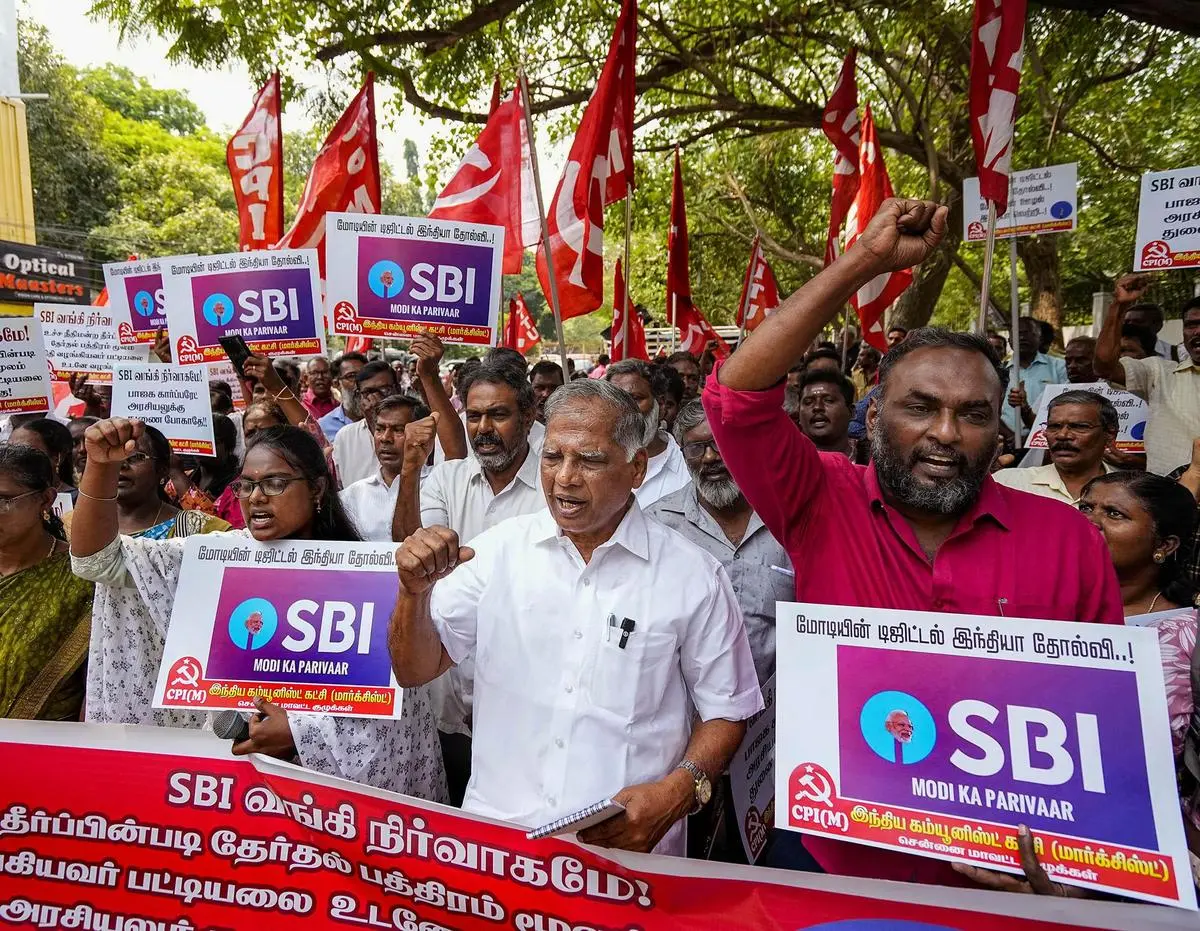
It was a judgment passed by the Bombay High Court on June 21, 1957, which changed the course of political funding in India by legally sanctioning corporate financing of parties. At its crux was this question: can Tata Iron and Steel Co. Ltd (TISCO) amend its memorandum of association to make financial contributions to political parties?
Corporate donations to political parties had until then operated in a legal vacuum, without any provision under the Companies Act, 1956. Many companies donated to parties by amending their memorandum, as TISCO did, which was challenged before the High Court by Jayantilal Ranchhoddas Koticha, a shareholder in the company. Appearing for the petitioner, the prominent lawyer and jurist H.R. Gokhale, who served as Union Law Minister from 1971 to 1977, argued that it was unlawful for companies to donate to parties and that “nothing could be more corruptive in a democracy than to permit industrial or commercial concerns to contribute funds to a political party”.
Even the eminent jurist and constitutional expert H.M. Seervai, who appeared for TISCO and said that it was primarily up to the company to decide what was for its good, acknowledged “the danger of such a power conferred upon a large, powerful, wealthy corporation in a democracy”.
The then Chief Justice of the Bombay High Court, M.C. Chagla, decided in favour of TISCO, but he reiterated the court’s concern over the possible negative impact of corporate funding of parties on India’s nascent democracy and nudged the legislature to bring in adequate safeguards through legal amendments.
Justice Chagla wrote: “We think it our duty to draw the attention of Parliament to the great danger inherent in permitting companies to make contributions to political parties. It is a danger which may grow apace and ultimately overwhelm and even throttle democracy in this country. Therefore, it is desirable for Parliament to consider under what circumstances and under what limitations companies should be permitted to make these contributions.”
Justice Chagla’s words proved to be prescient. Corporate donations form a major chunk of political parties’ funds today, and corporate might and influence remain a matter of concern even after the controversial electoral bonds scheme ended on February 15, 2024.
Contribution reports filed by political parties before the Election Commission of India (ECI) for the period April 1, 2024–March 31, 2025, and receipt and donation accounts submitted by electoral trusts to the ECI for the same period—the first full year since electoral bonds were scrapped by the Supreme Court—reveal that corporate funding of parties continues to thrive. More relevant than ever before then are concerns such as crony capitalism, the lack of transparency in political funding, and the dominance of money power in the electoral arena and its consequences for a level playing field.
Anjali Bhardwaj, transparency activist and co-convenor of the National Campaign for People’s Right to Information, said: “The question really is why are corporates funding political parties? There is no such thing as a free lunch. So, quid pro quo is very real. We saw in the electoral bonds disclosures how big corporates gave large amounts of money in an anonymous manner to ruling parties and in return landed large contracts. There was also the issue of extortion, with investigative agencies filing cases against companies and then those very companies giving money to the ruling party. Electoral bonds were struck down, but the same practices appear to be continuing.”
The ruling BJP received Rs.6,088 crore in donations over Rs.20,000 in 2024–25, a huge jump from Rs.3,967 crore in 2023–24.
Meanwhile, the Congress, the principal opposition party, received Rs.522.13 crore, a sharp decline from Rs.1,129 crore in 2023–24. Other prominent parties with a dip in funding include the Trinamool Congress, the Telugu Desam Party (TDP), the YSR Congress Party (YSRCP), the Bharat Rashtra Samithi (BRS), and the Biju Janata Dal (BJD). However, there was an increase in donations received by the Janata Dal (United), or JD(U), the Samajwadi Party, and the CPI(Marxist-Leninist) Liberation.
CPI(M) workers protest after the SBI moved the Supreme Court seeking more time to disclose electoral bond details, outside an SBI office in Chennai, on March 6, 2024.
| Photo Credit:
R. Senthilkumar/PTI
A substantial chunk of the funds came from corporates through direct donations as also electoral trusts. There has, in fact, been a big jump in donations through trusts, indicating that ever since the Supreme Court struck down the electoral bonds scheme, corporates have opted for the trust route. In 2023–24, trust donations amounted to Rs.1,218.36 crore, which surged to more than Rs.3,826 crore in 2024–25. Over Rs.3,100 crore of the amount received by the BJP in 2024–25 came from trusts.
More than Rs.3,700 crore of the total donations to all parties came from 3 out of the 15 electoral trusts whose annual reports are available on the ECI’s website. Five trusts reported nil receipts and donations, and five others have not filed their contribution reports as of February 15, 2026.
The biggest donor was Prudent Electoral Trust, which gave Rs.2,668.49 crore to various parties, with the lion’s share of Rs.2,180.7 crore going to the BJP. It gave Rs.216.3 crore to the Congress and smaller amounts to 13 other parties, including the Trinamool, the TDP, the YSRCP, the JD(U), the BJD, the BRS, and the AAP.
Progressive Electoral Trust donated Rs.914.9 crore, with Rs.757.6 crore going to the BJP, and Rs.77.3 crore to the Congress. Several other parties received Rs.10 crore each.
New Democratic Electoral Trust disbursed Rs.160 crore, of which Rs.150 crore went to the BJP and Rs.5 crore each to the Shiv Sena (UBT) and the Trinamool.
According to an analysis of the trusts’ 2024–25 contribution reports by the Association for Democratic Reforms (ADR), 228 corporates made donations. The top donation of Rs.500 crore was made by Elevated Avenue Realty LLP, followed by Tata Sons Pvt. Ltd at Rs.308.13 crore, Tata Consultancy Services Ltd at Rs.217.6 crore, and Megha Engineering and Infrastructure Ltd at Rs.175 crore. The top 10 donors alone gave Rs.1,908.8 crore, which was 49.9 per cent of the total amount given by all the trusts. All 10 companies donated to the 3 trusts with the biggest donations: Prudent Electoral Trust, Progressive Electoral Trust, and New Democratic Electoral Trust.
Former Chief Election Commissioner T.S. Krishnamurthy said: “I have always held the view that corporate funding is certainly not a desirable method of financing political parties and thereby our elections. This is, in fact, an obnoxious nexus between the corporates and the parties. The sooner the problem is addressed the better it will be for our democracy.”
That the issue continues to hold sway even after the electoral bonds scheme ended harks back to the Bombay High Court’s warnings in 1957 and underscores the long and troubled trajectory of the debate since then.
Soon after the court’s decision, in 1961, Parliament amended the Companies Act, 1956, introducing Section 293A to allow corporate contributions to parties but with the amount restricted to either Rs.25,000 per financial year or 5 per cent of average net profits from three preceding financial years, whichever is greater. The provision also made it mandatory for companies to disclose in their profit and loss accounts any donations to political parties and the names of the parties.
In 1963, the Santhanam Committee on Prevention of Corruption recommended a total ban on all donations by incorporated bodies, noting the prevalence of corruption at high political levels due to the unregulated collection of funds and electioneering by parties.
Subsequently, in 1969, the Indira Gandhi government amended Section 293A of the Companies Act to ban corporate donations to parties entirely. However, the move is believed to have resulted in corporate funding going underground with bribes given to political and government functionaries to get clearances or contracts.
In 1985, during Rajiv Gandhi’s term, the Companies Act was amended to reverse the ban. While there was no specific upper limit, companies could donate only up to 5 per cent of their average net profits from three preceding financial years. Section 182 of the Companies Act, 2013, retained this provision, with the upper limit increased to 7.5 per cent of average profits from three preceding financial years.
The electoral bonds scheme that the Narendra Modi government introduced in 2017 amended Section 182 of the Act, removing the limit entirely. This effectively allowed even loss-making companies to contribute unlimited amounts to parties. Critics said that it opened the possibility for shell companies to route black money into the electoral process, more so because the amendment deleted the provision requiring companies to disclose contributions to parties. The Supreme Court struck down these amendments along with the electoral bonds scheme in 2024.
The scheme marked a vital change in political funding by allowing unlimited and anonymous donations by corporates. Corporates or individuals could purchase bonds from the government-owned SBI and donate them to parties, who could encash them. Donors would have to declare the bonds they purchase, and parties would have to report the amount they receive through bonds. But the donor could remain anonymous.
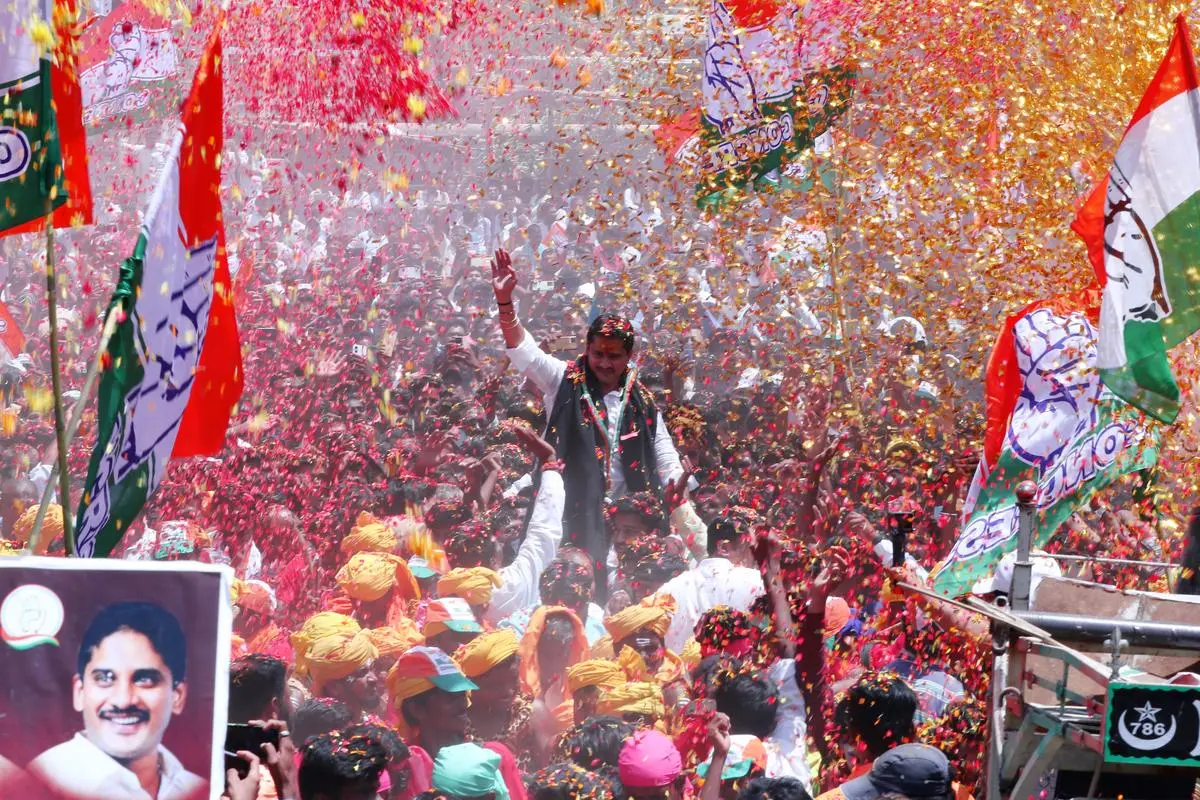
Nara Bharat Reddy, the Congress candidate for Ballari City constituency, in a massive rally before filing his nomination papers on April 18, 2023, in Karnataka.
| Photo Credit:
Sridhar Kavali
The Supreme Court junked the scheme, saying it violated citizens’ right to know about the donations and harmed the cause of free and fair elections. Between March 2018 and January 2024, in 30 phases, bonds worth Rs.16,518 crore were purchased. The BJP was the biggest beneficiary, having received Rs.8,251.75 crore, which was 50 per cent of the total amount donated through bonds. The Congress was way behind at Rs.1,951.68 crore.
“Electoral bonds were patently illegal. They were unconstitutional and so egregious in violation of the statutes that they had to go. It was a complete surrender to corporate donations,” said Vipul Mudgal, director and chief executive of the NGO Common Cause, a lead petitioner alongside the ADR against electoral bonds in the Supreme Court.
With electoral bonds now a thing of the past, electoral trusts have become the pre-eminent source of corporate funding. They are seen as having greater transparency because they are legally mandated to disclose the funds parties receive, the details of donors, and how much is donated to which party.
Electoral trusts are set up by companies with the sole aim of disbursing funds to political parties. The first trust was set up by the Tata Group in 1996. By January 31, 2013, when the Union government laid down guidelines under the Electoral Trusts Scheme, six trusts had been formed.
Under the 2013 scheme, trusts are required to disburse at least 95 per cent of the funds received in a year to parties. They must maintain an account with details of contributors and recipients. However, the criteria for deciding how much money can go to which party and the details of which company’s contributions can go to which party remain unclear. Trusts are hence seen as having limited transparency.
Analysing trusts’ data, the ADR observed that the annual reports of 5 of the 20 trusts registered with the Central Board of Direct Taxes were not available on the ECI’s website even three months after the deadline expired.
“All corporates should make details of their political contributions along with names of political parties contributed to available in public domain through their websites (in annual reports or in a dedicated page) for increasing transparency in political financing,” the ADR said in its report.
It also recommended that the name of the parent company or group of companies that set up a trust be included in the name of the trust.
Bhardwaj said: “The huge amounts of money parties have received in 2024–25, with the ruling BJP, not surprisingly, getting the lion’s share, shows that money power is a big factor in our elections. The 2024 Lok Sabha elections were the most expensive in the history of democracy globally. This definitely has a detrimental impact on democracy.”
Another important issue to be tackled, according to Mudgal, is the lack of ceiling on parties’ expenditures, which makes the cap on electoral spending of candidates redundant.
“We have seen parties spending limitless money on one constituency, where all the Ministers and who’s who descend in their helicopters. Hundreds of crores is spent and it all comes under the party’s expenditure,” Mudgal said.
Common Cause is in the process of approaching the Supreme Court seeking a remedy to the legal anomaly under Section 77(1) of the Representation of the People Act, 1951, which places a cap on the election expenditures of candidates but excludes limits on party expenditures.
Suggestions have been made to end corporate funding of parties altogether and institute public funding or a national election fund from which money can be donated on the basis of party performance.
Krishnamurthy said: “If at all corporates donate to parties, it should be done via a national election fund. Corporates can contribute to this fund, and the ECI can distribute funds to parties on the basis of some guidelines. Also, parties should not be allowed to spend their own funds on elections. If there is a shortage of funds, the government can contribute to it. If we have such a system in place, parties cannot become rich and dictate the course of politics.”
Also Read | The totalitarian project behind the electoral bonds scheme
Also Read | Electoral bonds: Why it is a giant scam