11
11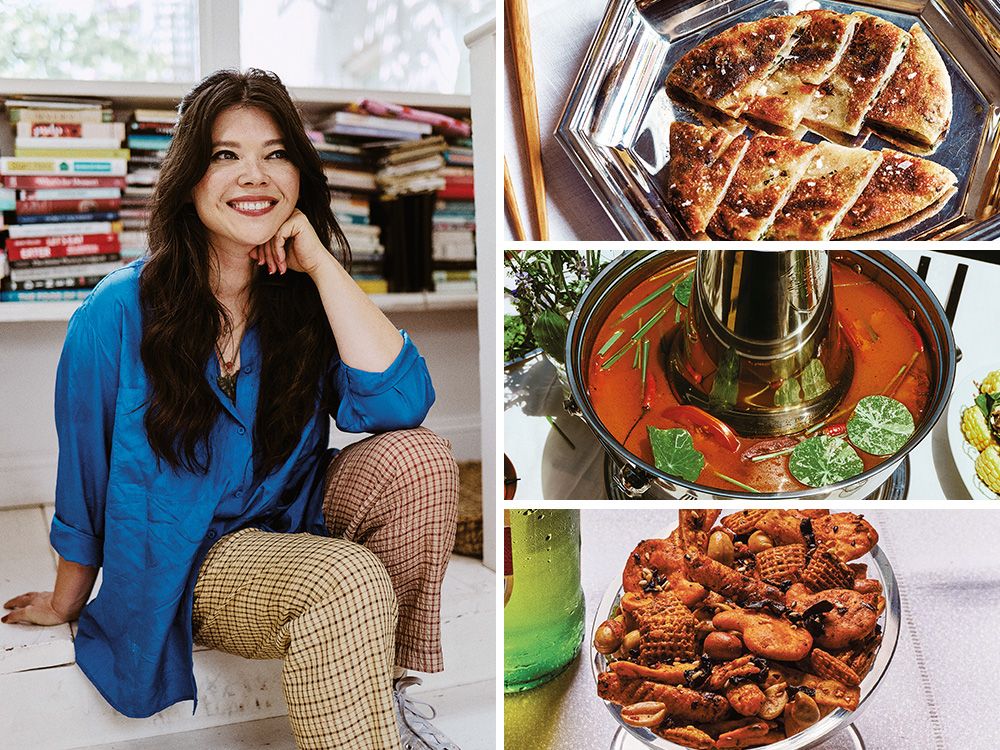
Our cookbook of the week is
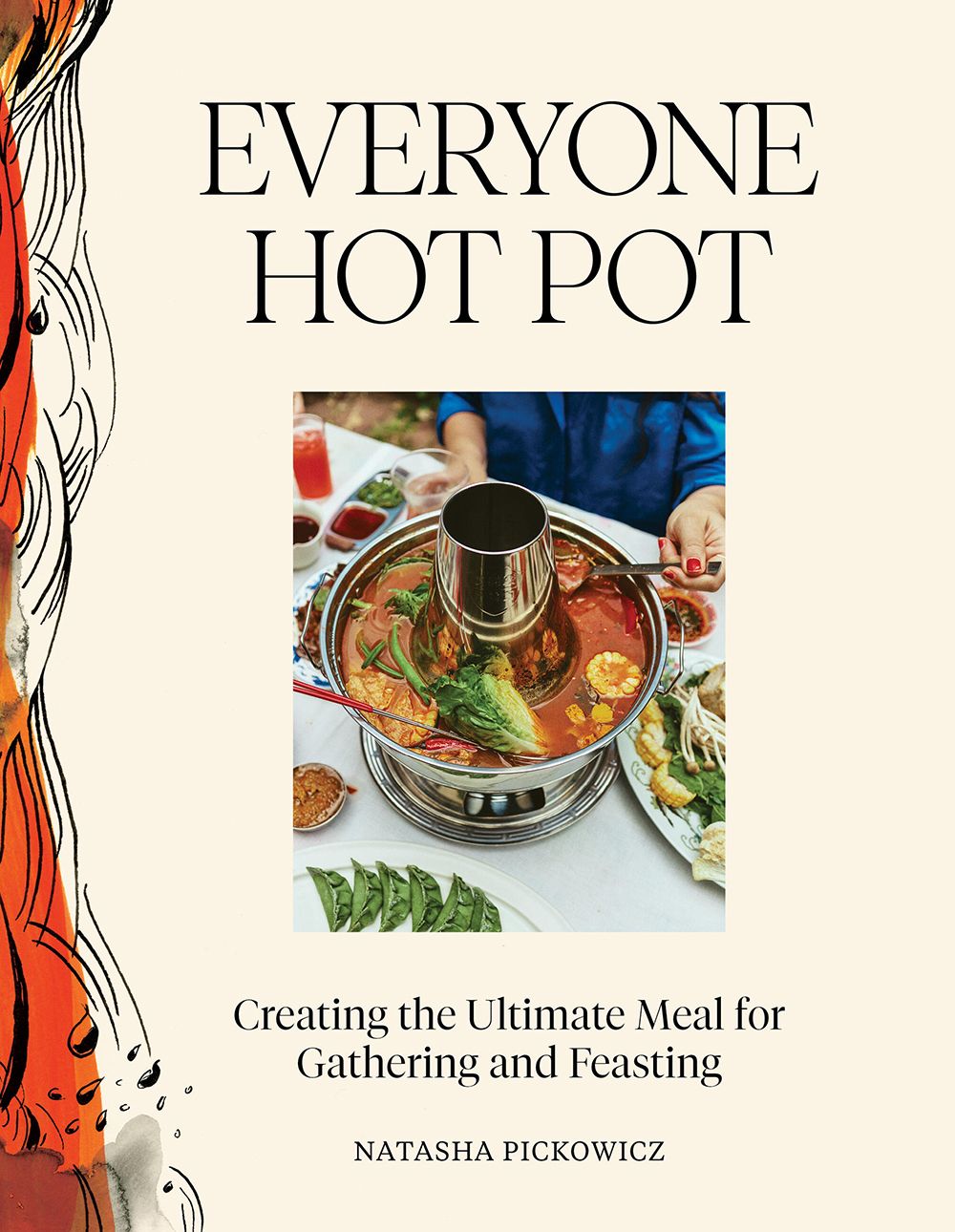
Everyone Hot Pot
by Natasha Pickowicz.
Jump to the recipes:
not-just-scallion
pancakes
, chili crisp
snack mix
, and charred
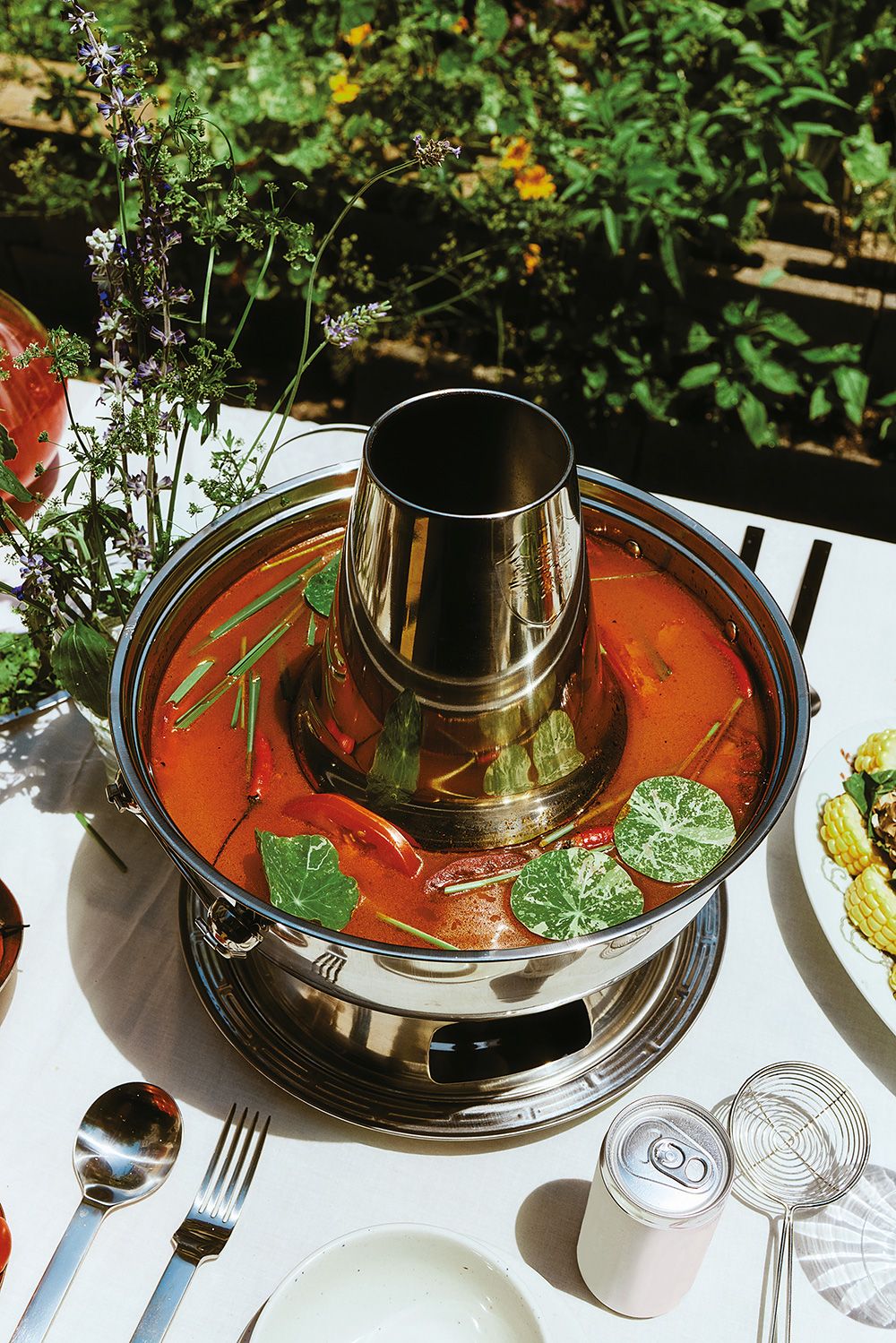
tomato and lemongrass broth
.
February can be an austere month. For
Natasha Pickowicz
, hot pot is the antidote. “In a lot of Asian cultures, we’re about to celebrate the
Lunar New Year
, and that’s actually the biggest party moment of the year. That’s when you’re reconnecting with family and friends. That’s when you’re gifting for two weeks, and there’s revelry, parties, hot pot.”
Pickowicz wrote her second cookbook, Everyone Hot Pot (Artisan, 2026), for celebratory times like these and more casual ones as well. “I wanted the book to appeal to everybody, because if you were wanting to be a bit frugal, have more intimate, low-key gatherings, have a nourishing meal that feels low stakes, hot pot is that, too.”
Known for her work as a pastry chef, Pickowicz’s followup to
More Than Cake
(2023) is rooted in family. She embraced the opportunity to show another side of herself as a cookbook writer, and her family comes through in more than the tradition. Pickowicz’s mother, painter Li Huai, illustrated the book and her father, historian Paul Pickowicz, wrote an essay.
Hot pot has evolved into a personal expression for Pickowicz. Her mother is from Beijing, which has its own northern style of hot pot. Through her research for the book, Pickowicz was struck by the variation, whether hot pot from other regions of China, Japan, Korea, Vietnam or Thailand.
Everyone Hot Pot opens with the essentials, including equipment and tools, what to buy and how to prep — “My rule of thumb is, if you can’t fit the whole thing in your mouth in one bite, it’s probably too big to go in the hot pot” — before moving into more than 50 recipes for all aspects of the feast, including broths, breads, snacks and desserts.
Pickowicz says it was important for her to bring a chef’s perspective to the book — not a rigid set of rules. She aims to empower readers to do as she does: pull together ingredients from different traditions and infuse hot pot with her own unique flavour and ingredient pairings.
“I’m more interested in hot pot as a framework and as a way of enjoying life,” says Pickowicz. “It responds to me, and I wanted to feel like I could give people permission to do that for themselves as well.”
Hot pot is an interactive meal, she highlights — most of which takes place on the table, in the moment. It can be any combination of store-bought or homemade items you like, and Pickowicz hopes readers will accent their meals with dishes from the book, whether it’s her aromatic
charred tomato and lemongrass broth
or crunchy,
chili crisp snack mix
. “This meal can meet you in the middle.”
Now based in New York City, Pickowicz began her culinary career in Montreal, where she freelanced at
The Gazette
, baked at
Dépanneur Le Pick Up
and went on to work as a pastry cook at
Lawrence
. Pickowicz didn’t attend culinary school, but it was there that she learned the fundamentals of “working neat, staying organized and being respectful of others.” She describes the experience as life-changing.
“I fell in love with this idea of working as a team towards a united goal, and the pride everyone took in making this beautiful food, and the pride you would feel when a guest loved something that you made. And also that hunger around learning and getting good at something through repetition, and this idea of becoming consistent around doing something,” says Pickowicz, adding that she was struck by the city’s love of food and gathering. “I had never experienced anything like it before, and I haven’t since, and I think it was just the best possible place for me to have that first exposure and be surrounded by people who are so passionate about food and hospitality.”
When writing the proposal for Everyone Hot Pot, Pickowicz came across photos of a party she threw in her Little Italy apartment with new friends — all hot pot novices — gathered around a stockpot. As much as Pickowicz appreciates connecting with others who grew up with it, her favourite part is sharing the ritual with those who haven’t experienced it before.
“Seeing the surprise, the exhilaration, the sense of discovery — I think that’s what a lot of chefs and cookbook authors chase after, is this feeling of sharing, and this feeling of releasing information and handing it over to other people,” says Pickowicz. She believes that hot pot is poised to explode in popularity and is happy to play a part in helping readers find joy in it. “It’s such a magical way of getting to know other people and coming together.”
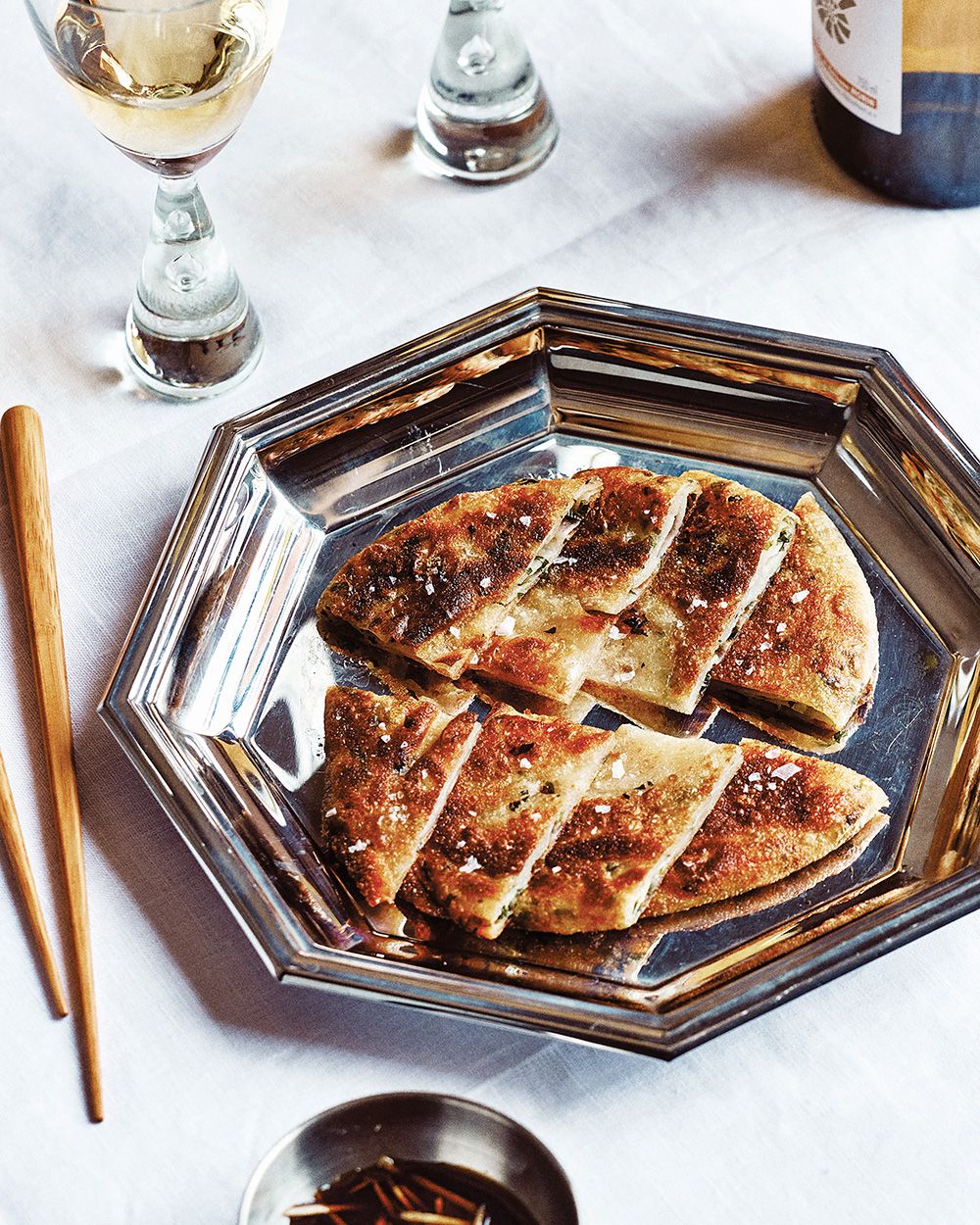
Makes:
four 8-inch (20-cm) pancakes
1 cup (240 mL) filtered water
1 cup (about 30 g) packed fresh herbs (like scallions, basil, parsley, mint, tarragon, cilantro, sorrel or dill)
2 cups (240 g) all-purpose flour
1 tsp kosher salt
About 1/4 cup (60 mL) vegetable oil, for cooking and shaping
1/4 cup (60 mL) sesame oil
Flaky sea salt, to finish
Pour the water into a small pot and heat until boiling.
Meanwhile, finely chop the fresh herbs into confetti; measured tightly in a cup, the herbs should collapse to yield about 1/3 cup.
Combine the flour and salt in a medium bowl. Slowly stream in the hot water, stirring with chopsticks until a loose dough forms. Once the dough is cool enough to handle, bring this shaggy mixture together by hand, kneading for a minute or two.
Shape the dough into a rough ball; it will be sticky. Cover and let rest in the refrigerator to chill for at least 30 minutes and up to 8 hours.
Using a big knife or bench scraper, divide the dough into quarters, each weighing about 4 1/2 ounces (125 g). Form a hand into a claw, like you’re holding an invisible baseball, then roll the dough pieces into smooth balls.
Lightly grease a rolling pin and your work surface with vegetable oil. Roll a piece of dough into a circle about 10 inches (25 cm) wide; the dough will be very thin and sheer. Brush the dough circle with a thin coating of sesame oil (about 1 teaspoon), and top with a heaping tablespoon of the chopped herbs.
Starting with the bottom of the circle, roll up the dough, like a scroll or a jelly roll. Twist the scroll into a tight spiral, like a snail’s shell, as it lies flat on your work surface.
Repeat with the remaining dough. Drape a dishcloth over all the dough spirals and let rest for 30 minutes.
Line a large baking sheet with parchment paper. Roll each dough spiral into a circle about 8 inches (20 cm) wide, adding a little vegetable oil to the rolling pin if the dough feels overly sticky or tears. Stack the circles on the lined baking sheet as you go, separating each one with a small square of parchment. The pancakes shouldn’t feel overly sticky or wet, but it’s okay if the herbs slightly tear the dough while you’re rolling it out. (Note: Don’t roll the pancakes too thinly, which would compress their flaky layers and result in more of a cracker.)
At this point, you can partially freeze the pancakes on a baking sheet lined with parchment paper, then stack them in an airtight container in the freezer for up to 3 weeks.
When you’re ready to cook the pancakes, heat 1 tablespoon of vegetable oil in a large skillet over medium heat. Set a baking sheet lined with a dry towel nearby as a place for the pancakes to land and drain once removed from the oil.
Fry the pancakes one at a time, 4 to 5 minutes for each pancake, flipping halfway through and replenishing the oil after each round. Transfer to the towel-lined baking sheet and sprinkle with flaky sea salt.
Using a sharp cleaver or chef’s knife, cut each pancake in half, then cut each half into 1-inch (2.5 cm) wide strips. Serve immediately.
HOT (POT) TIP:
Don’t want to transfer savoury smells like sesame oil or chopped alliums to your rolling pin? Roll each pancake between two squares of parchment about 12 inches (30 cm) wide.
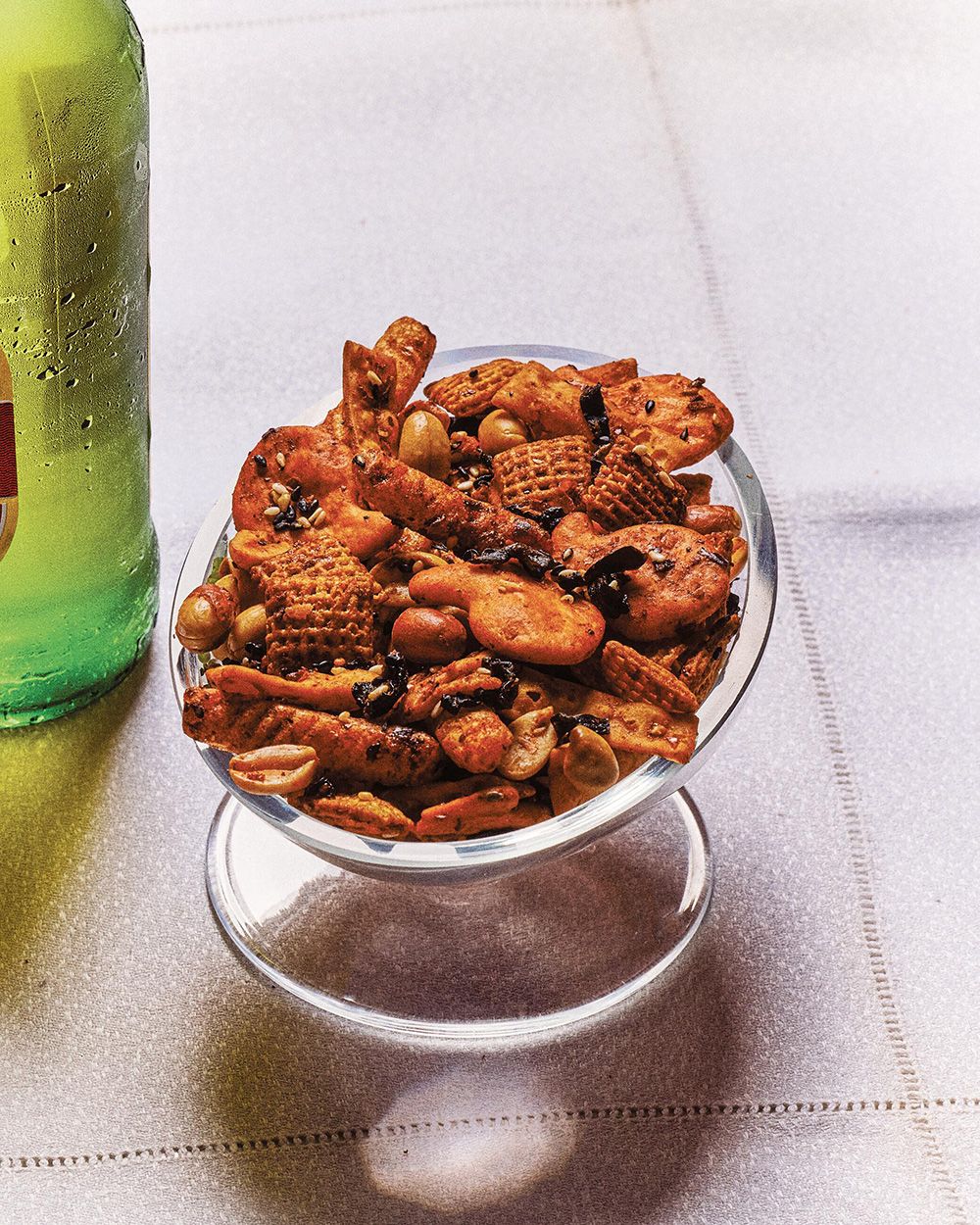
Makes:
8 cups (600 g); serves 6 to 8
2 cups (70 g) woven rice cereal, like Chex
2 cups (55 g) shrimp chips (look for the Calbee brand)
2 cups (100 g) fried wonton strips
1 cup (55 g) small cheese crackers, like Cheez-Its
1 cup (130 g) roasted, unsalted peanuts
4 tbsp (1/2 stick/55 g) unsalted butter
1/4 cup (57 g) chili crisp
2 tbsp sweet chili sauce
2 tbsp black vinegar
1/2 tbsp soy sauce
3 tbsp dried wakame seaweed
2 tbsp untoasted white or black sesame seeds
Preheat the oven to 275F (135C). Line a half baking sheet with parchment paper.
Combine the rice cereal, shrimp chips, wonton strips, cheese crackers and peanuts in a large bowl.
Melt the butter in a small pot over low heat. Add the chili crisp, sweet chili sauce, black vinegar and soy sauce and whisk until smooth and emulsified. Add the wakame and sesame seeds and stir until the seaweed is rehydrated and soft, 2 to 3 minutes.
Pour this mixture over the dry snacks and toss well to combine. Spread into one layer on the lined baking sheet and transfer to the oven.
Bake for 35 to 45 minutes, stirring occasionally, to allow the mix to dry out and gently toast until it is darkened in places and there are no damp spots; the mixture will continue to crisp up as it cools. Do not overbake! Remove from the oven and let cool completely.
Store the snack mix in an airtight container at room temperature for up to 1 month.
Makes:
2 quarts (1.9 L)
1 white onion, halved
One 14.5-oz (410 g) can fire-roasted tomatoes
2 qt (1.9 L) filtered water
One 2-inch (5 cm) piece fresh ginger, peeled and sliced into 1/4-inch-thick (0.6 cm) rounds
Four 6-inch (15-cm) lemongrass stalks, halved lengthwise
2 celery stalks
2 tbsp olive oil
2 tbsp tomato paste
6 Thai chilies or 1 tsp ground gochugaru chili flakes, plus more for garnish (see Tip)
2 tsp kosher salt
Juice of 1 lime
1 beefsteak or heirloom tomato, for garnish
Heat a large pot over medium heat for 3 to 4 minutes. Place the onion halves, cut side down, in the pot and let sizzle, untouched, until they are blackened, 5 minutes.
While the onion halves are charring, puree the canned tomatoes with an immersion or tabletop blender until smooth.
Add the tomato puree and water to the pot, along with the sliced ginger, lemongrass, celery, olive oil, tomato paste, Thai chilies, and salt. Bring to a boil over high heat, then reduce the heat to very low, cover, and let barely simmer, until slightly reduced and the onion and celery are translucent and super soft, 2 to 3 hours.
Remove the pot from the heat and strain the broth through a fine-mesh sieve, discarding the solids. Stir in the lime juice.
Use the broth immediately or store in an airtight container. It will keep for 1 week in the refrigerator or for up to 2 months in the freezer.
To prepare for hot pot, warm the broth, if needed, and then transfer to the hot pot topper. Slice the tomato into rounds about 1/4 inch (0.6 cm) thick. Drop the slices into the broth, like lily pads, and add a few fresh Thai chilies.
HOT (POT) TIP:
Thai chili, a small, spicy pepper that turns from green to red as it ripens, can be found in many Asian grocery stores. Keep a surplus in the refrigerator for perking up broth, slicing thinly into simple dipping sauces, or jazzing up pickle brines.
Recipes and images excerpted from
Everyone Hot Pot
by Natasha Pickowicz (Artisan Books). Copyright ©2026. Photographs by Alex Lau and illustrations by Li Huai.
Our website is the place for the latest breaking news, exclusive scoops, longreads and provocative commentary. Please bookmark nationalpost.com and sign up for our cookbook and recipe newsletter, Cook This, here.