 11
11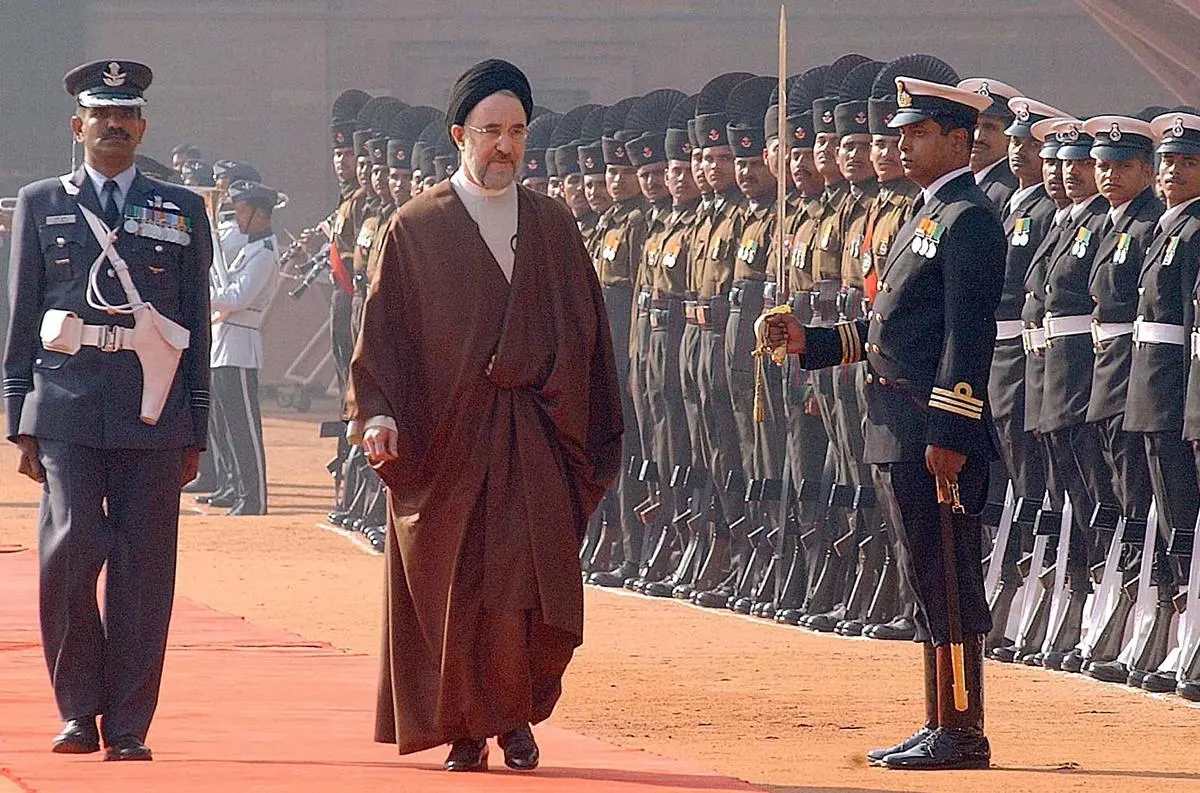
On February 1, 1979, as Ruhollah Khomeini arrived in Tehran at the head of a popular revolution, much was to change for Iran’s relationships with other nations. This included India, the birthplace of Khomeini’s paternal grandfather, Syed Ahmad Musavi Hindi (Uttar Pradesh, specifically). This change was to be twofold: greater geopolitical alignment between India and Iran compared with a difficult relationship during the rule of Shah Mohammad Reza Pahlavi, and a greater inhibiting influence of the US on India-Iran ties.
Forty-seven years later, the India-Iran relationship has become one of the rare bilateral equations in the world that is so abundant in intent for deeper, wider cooperation, yet remains so hobbled by the influence of a third party.
The roots of this peculiar character of the bilateral relationship lie in the decades preceding the 1979 revolution, during the Shah’s reign. While India and Iran maintained a steady engagement during the Shah’s reign (with three Prime Ministers visiting Tehran before 1979 and the Shah visiting New Delhi four times), there was a severe dearth of strategic alignment.
The Shah’s security imperatives vis-a-vis the Soviet Union, as well as his ambition to make Iran a stronger regional power, generated a firm basis for cooperation with the US. This logic was nourished by the US’ own need for an Iranian bulwark against the Soviet Union and eventually by its “Twin Pillars” policy in West Asia in the 1970s. This policy sought to rely on Saudi Arabia and Iran for the security of energy supply lines while the US remained bogged down in Vietnam, with Iran being the preferred partner in the Gulf region.
Between 1970 and 1978, Iran emerged as the US’ largest arms buyer, accounting for 25 per cent of all US military exports in that period, which resulted in a lightning-fast military build-up that established Iran as the world’s fifth largest military power.
Economically too, the US remained a significant partner of Iran, with both countries signing an economic agreement worth $15 billion in 1975. Collectively, these elements were misfits for India’s postcolonial and non-aligned foreign policy logic.
This strategic misalignment was worsened by Iran’s closeness to Pakistan, which was also an integral part of the US’ Cold War security architectures. During the 1971 India-Pakistan War in particular, Iran provided strong diplomatic backing to Pakistan, ensured emergency fuel supplies, and served as a key conduit of arms, including advanced aerial platforms.
The change of government in 1979 did not inherently contain any catalyst for a deepening of ties, as India’s preferred partners in West Asia were the secular Arab republics. However, immediate and substantial changes in Iran’s foreign policy led to greater space for alignment in the outlook of both nations.
Among the key slogans of the revolution was the phrase “Na sharqi, na gharbi” (No east, no west), well in line with the fundamentals of the India-led Non-Aligned Movement, in which Iran began participating in a significant way after the 1979 revolution.
Also Read | Will Iran’s protests bring down the Islamist state?
The rupture of US-Iran ties as a result and the revolution’s anti-monarchic character were sufficient for India to avoid condemning the revolution and to maintain steady engagement. Also, despite India’s strong relationship with Ba’athist Iraq under Saddam Hussein, it remained largely neutral during the bloody and protracted Iran-Iraq War (1980-88).
These years also witnessed a gradual breakdown in Iran-Pakistan ties, even as Pakistani President Zia-ul-Haq initially hailed the Iranian Revolution as a vindication of theocratic governance since he was also driving Islamisation efforts in his country.
Apart from real and perceived sectarian threats to Pakistan due to Iran’s overtly Shia leadership, Pakistan’s own relationship with the US had grown exponentially when the country became a front-line state for the US to resist the Soviets, who invaded Afghanistan in 1979, weeks after Khomeini formalised Shia theocratic rule in Iran.
Additionally, Iran was also significantly concerned at the rise of the Pakistan-backed Taliban in Afghanistan, which emerged supreme in the civil strife that enveloped the country after the Soviet exit in 1989. Fundamentalist, puritan, and anti-Shia in outlook, the Taliban stormed to power in Kabul in 1996, prompting Iran to deepen its support to opposing military factions. All through that decade, both India and Iran resolutely backed the Northern Alliance, led by Ahmad Shah Massoud, based in the Panjshir Valley.
After the revolution in Iran, a constellation of external variables rapidly fell into place to enable deeper strategic cooperation between Iran and India, building on centuries of civilisational ties. Through the 1980s, Iranian oil exports to India touched 2,50,000 barrels per day (bpd), rising further to about 3,00,000 bpd as the Indian economy liberalised.
By 2001, with Prime Minister Atal Bihari Vajpayee’s visit to Iran, both sides signed the Tehran Declaration, which committed them to stronger ties and laid the foundation for an International North-South Transport Corridor (INSTC) from Russia through Iran to India. The Declaration stood out for its language against terrorism and extremism and its emphasis on Afghanistan’s territorial integrity and sovereignty—all effectively directed against Pakistan.
By 2003, during Iranian President Mohammad Khatami’s visit to New Delhi, India and Iran signed the New Delhi Declaration, which, among other things, formalised India’s investment in the Shahid Beheshti port in Iran’s Chabahar. Apart from allowing India a sea-land route to access Central Asia and post-Taliban Afghanistan by circumventing Pakistan, it also acted as a balance against Pakistan’s own growing cooperation with China in Gwadar port, 170 kilometres east of Chabahar on the same coast.
In New Delhi on January 25, 2003, Mohammad Khatami, the then President of Iran, inspecting a guard of honour. During his visit, India and Iran signed the New Delhi Declaration, which formalised India’s investment in Chabahar.
| Photo Credit:
V. SUDERSHAN
All through the 2000s, India-Iran trade steadily grew, with a focus on energy, peaking by 2008-10 when Iran emerged as India’s second largest oil supplier, accounting for 12–15 per cent of India’s energy basket (about 4,00,000 bpd). Notably, in these years, Iran offered India more favourable commercial terms, which included 90-day credit periods and free shipping, than most other Gulf oil exporters.
In those years, the US-Iran relationship remained strained, with Iran suffering American seizure of its assets and a trade embargo immediately following the hostage crisis of 1979, when Iranian student revolutionaries seized the US Embassy.
The US imposed a wider range of sanctions across the 1980s and 1990s because of what the US said was Iran’s “sponsorship” of terrorist networks in the region and against illicit proliferation of conventional arms. It also imposed novel “secondary sanctions” aimed at Iran’s energy sector through the Iran-Libya Sanctions Act during the Bill Clinton administration.
A wider tranche of UN sanctions hit Iran between 2006 and 2010 following the revelation of undisclosed Iranian nuclear facilities, while the Barack Obama administration expanded sanctions against it by passing the Comprehensive Iran Sanctions, Accountability, and Divestment Act (CISADA) in 2010.
In that period, Iran’s nuclear programme remained ambiguous. While the country had made preliminary breakthroughs in weapons grade nuclear enrichment, it had been making strong efforts to overtly distance itself from nuclear weapons since 2003, when the US invaded neighbouring Iraq on the same (ultimately false) pretext: the illicit possession of weapons of mass destruction.
Since Iran’s overt posture favoured global disarmament, along with the country being an NPT member-state, the nuclear question never had any substantial effect on India-Iran ties. India itself viewed the NPT regime as inherently discriminatory and preferred global, and not selective, disarmament. (The 1968 international Treaty on the Non-Proliferation of Nuclear Weapons, or NPT, is aimed at preventing the spread of nuclear weapons.)
However, Iran-US ties retained some degree of engagement under reformist administrations in Iran such as those of Mohammad Khatami (1997–2005) and later Hassan Rouhani (2013–21) and Democratic Party administrations in the US such as Barack Obama’s (2009–17). There was a certain modicum of good faith between the two nations, even though the relationship was antagonistic overall.
India secured numerous successive waivers for oil imports from Iran even as the most stringent sections of the CISADA went into effect, as a result of which Iran was among its top suppliers until the early 2010s. Even in the face of US demands that countries show “reduced Iranian imports”, and after the EU disconnected Iranian banks from the SWIFT network (which routes instructions securely between banks for reliable fund transfer), India continued to import Iranian oil using a rupee-rial mechanism. Iran accounted for about 6–7 per cent of India’s energy basket even though numbers were lower overall.
However, following the Iran nuclear deal (Joint Comprehensive Plan of Action, or JCPOA) in 2015, these constraints disappeared, leading to a skyrocketing of India-Iran trade figures. At least until 2019, Iranian oil imports jumped back into the double digits, as a share of India’s energy mix (between 4,00,000 bpd and 5,40,000 bpd).
As the first Donald Trump administration settled into the White House in 2017, it became increasingly clear that US policy towards Iran was to change dramatically. Apart from unilaterally withdrawing the US from the JCPOA, despite UN and International Atomic Energy Agency certification of Iran’s compliance, and designating Iran’s Islamic Revolutionary Guard Corps as a terrorist organisation, Trump imposed new crippling primary and secondary sanctions on Iran through a campaign of “maximum pressure” and the Countering America’s Adversaries Through Sanctions Act.
Despite securing initial waivers, India’s import of Iranian oil dropped by a mammoth 92 per cent, bringing down bilateral trade with it. By 2020-21, total oil imports from Iran dropped to zero. The availability of cheap Russian oil, especially after that country’s invasion of Ukraine in 2022, provided India with an alternative to fill the gap.
Unfortunately, Iran’s relationship with the US never recovered post-2019. The Joe Biden administration (2021-2024) partially eased implementation of sanctions. However, the structural changes imposed by the first Trump administration, the obliteration of good faith owing to Iranian distrust of Washington, the failure of European nations to mitigate the effects of Washington’s withdrawal from the deal, as well as Iran’s own incremental progress in its covert nuclear programme, making it near impossible for an overnight reduction in the indirect strains that the India-Iran relationship was facing.
More importantly, across the 2000s and 2010s, while India’s oil trade with Iran was steady, India’s investment in the Chabahar port was struggling to mature. While the INSTC was largely stillborn; neither India nor Iran could secure the requisite amount of specialised equipment and machinery, insurance mechanisms, and timely funding, among other things, owing to US sanctions.
Hence, even as it conceded to US pressures on energy imports, India maintained a focus on negotiating a specific waiver of sanctions for its involvement in Chabahar. Until the Taliban stormed back to power in 2021, India’s case was especially helped by the US’ interest in stabilising Afghanistan.
Nonetheless, the continued negative impact of extant US sanctions meant that the India-Iran relationship eventually became a single-issue partnership, driven by India’s geopolitical and strategic interest in Chabahar. Here, both sides signed a 10-year agreement for India’s operation of the Shahid Beheshti port in 2024.
With West Asia witnessing fresh turmoil from 2023, triggered by Hamas’ October 2023 terror attacks and Israel’s genocide in Gaza, India’s additional engagement with Iran focussed on ensuring the safety of sea lines of communication, particularly as a result of growing attacks on ships in the Red Sea by the Iran-backed Houthis.
By January 2025, as the second Trump administration took office, it was not immediately clear if the US approach to Iran would significantly change. Trump, while threatening military force against Iran, also campaigned on ending US involvement in foreign wars and kept open the option of a deal with Iran.
Iran’s abject economic crises and resultant internal sociopolitical turmoil meant that engagement with the US for sanctions relief was an imperative. However, diplomacy between both countries has so far been marked by a peculiar mix of bad faith: joint US-Israeli bombardment of Iranian nuclear sites and the increasing threat of future US military action alongside negotiations involving senior leadership.
While Israel continues to lobby the US away from a deal and towards more military action, especially as countrywide anti-regime protests rocked Iran in late 2025, Iran and the US began negotiations afresh in February 2026.
But Trump’s approach to talks with Iran is built on a strategy of coercion: building up US military capabilities around Iran and engaging in brinkmanship to extract greater concessions from Iran and bringing the region to a hair trigger.
A core part of this strategy has been a return to “maximum pressure” but with even greater punitive actions against Iran’s other partners, including India.
The Trump administration ended India’s sanctions waiver for Chabahar and imposed a fresh 25 per cent tariff on those trading with Iran, which has affected several countries including regional heavyweights such as the United Arab Emirates, Iran’s second largest trading partner.
Combined with fresh strains in the India-US relationship over Trump’s new tariffs, this has arguably forced India to further dilute the visibility of its involvement in Chabahar.
Consequently, its 2026-27 Budget estimate made no fresh allocations for the Chabahar port compared to Rs.400 crore in the previous year’s Revised Estimate. The government has also informed Parliament that the government had fulfilled its remaining commitment of $120 million to the port before the expiry of US sanctions waivers in April 2026. Formally, however, the Ministry of External Affairs has reiterated on multiple occasions that India continues to seek an extension of the waiver and continues to be invested in the port; the 2024 10-year agreement remains in place.
The Chabahar port has consistently fallen short of its expected goals, which includes potentially handling about 500,000 twenty-foot equivalent units (TEUs) of shipping (The TEU is a standard unit of cargo capacity, representing the volume of one 20-foot-long container). However, the port has arguably displayed strong year-on-year improvement.
For instance, Chabahar handled 80,000 TEUs and 3 million tonnes in bulk cargo in 2024-25, compared to 64,000 TEUs in 2023-24 and 9,000 TEUs in 2022-23. This exponential growth in two years, especially in the years of unprecedented regional conflict, validated Chabahar’s geopolitical advantage of being outside the near perpetually conflict-threatened Persian Gulf.
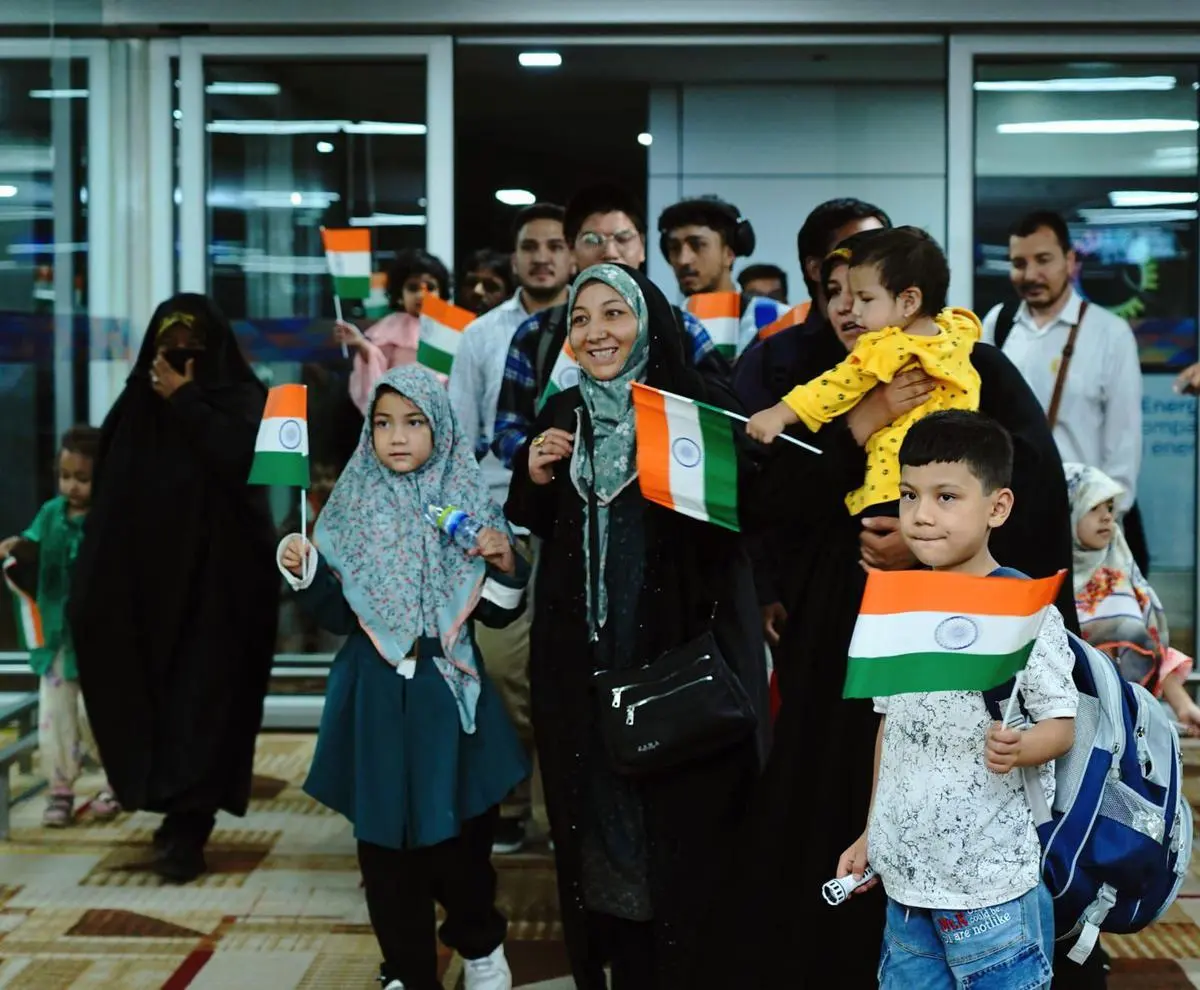
Indian nationals evacuated from Iran under Operation Sindhu, following the escalation of the Iran-Israel war, arrive in New Delhi in June 2025. The operation brought back more than 4,000 Indian nationals from Iran and Israel.
| Photo Credit:
PTI
Furthermore, apart from Iran’s own continued interest in Indian involvement in Chabahar, India has explicitly asserted that exiting Chabahar is “not an option”, even as reports suggested that India had significantly reduced its presence.
India’s approach continues to be centred around engaging Iran and keeping the country involved in its decisions. For instance, the Deputy National Security Adviser visited Tehran despite growing US-Iran tensions in January, before the Budget presentation, and met senior Iranian officials, including Ali Larijani, Secretary of Iran’s Supreme National Security Council.
Also Read | Iran’s anti-Israel stance has evolved from a purely ideological position into a sophisticated political instrument
It is also evident that a large amount of good faith continues to exist in India-Iran ties. Iran made special provisions to evacuate Indian students during its 12-day war with Israel in June 2025, expediting police investigations of missing Indians in Iran, and, more importantly, condemning the Pahalgam terror attack in April 2025 and reiterating its neutrality on Kashmir.
In turn, India continues to shun UN Human Rights Council resolutions criticising Iran on its human rights record, even moving from abstentions to voting against such resolutions, as was seen in January 2026 during anti-regime protests in Iran.
Apart from the US’ anti-Iran moves, the external variables in the India-Iran relationship also continue to favour greater India-Iran partnership. On one hand, traditional factors such as the Iran-Pakistan relationship continued to be favourable to India, especially as both Iran and Pakistan have continually clashed over the presence of anti-Iran and anti-Pakistan Baloch groups in each other’s territory.
(This even led to multiple clashes and climaxed in unprecedented Iranian missile and drone strikes in Pakistani territory (reciprocated by Pakistan in Iranian territory) by January 2024.) Similarly, with the Pakistan-Taliban relationship undergoing a violent rupture since 2022, both India and Iran have steadily increased contact and engagement with the Taliban; Iran has a greater stake in doing so since it shares a border with Afghanistan.
On the other hand, India and Iran have also witnessed significant strategic convergence in newer geopolitical theatres, such as that between Armenia and Azerbaijan. While Pakistan has an entrenched defence partnership with Azerbaijan, both Iran and India have similar relationships with Armenia. India has emerged as Armenia’s largest defence supplier while Iran is looking to secure a comprehensive strategic partnership with it.
Ultimately, as the spectre of a fresh US-Iran conflict continues to loom and puts Iran’s partners under fresh duress, it is evident that both India and Iran are arguably reflecting strategic patience, an Iranian conception to justify negotiations with the US instead of engaging in confrontation.
This means that rather than a deliberate Indian intent to dilute its partnership with Iran, both countries are looking to weather the Trump-induced storm with the expectation of resuming deeper cooperation subsequently and to eventually take advantage of their significant strategic convergence.
Indeed, past precedent strongly shows India’s intent and ability to take quick advantage of geopolitical windows of opportunity whenever the US and Iran have entered periods of relative amity. In effect, however, the US remains the ultimate arbiter of the India-Iran relationship.
Bashir Ali Abbas is a senior research associate at the Council for Strategic and Defense Research, New Delhi, and a former South Asia visiting fellow at the Stimson Center, Washington, DC.